Réplica Ediciónes at the ICP: A conversation with Arturo Salazar and José Ruiz of Ediciónes Réplica (whose answers are combined).
Interview by James Maher
ICP Photobook Fest 2026: May 8 (Fri) to 10 (Sun)
-Can you give us an introduction to the ICP’s Book on a Wall exhibit — Fuego Camina Conmigo?
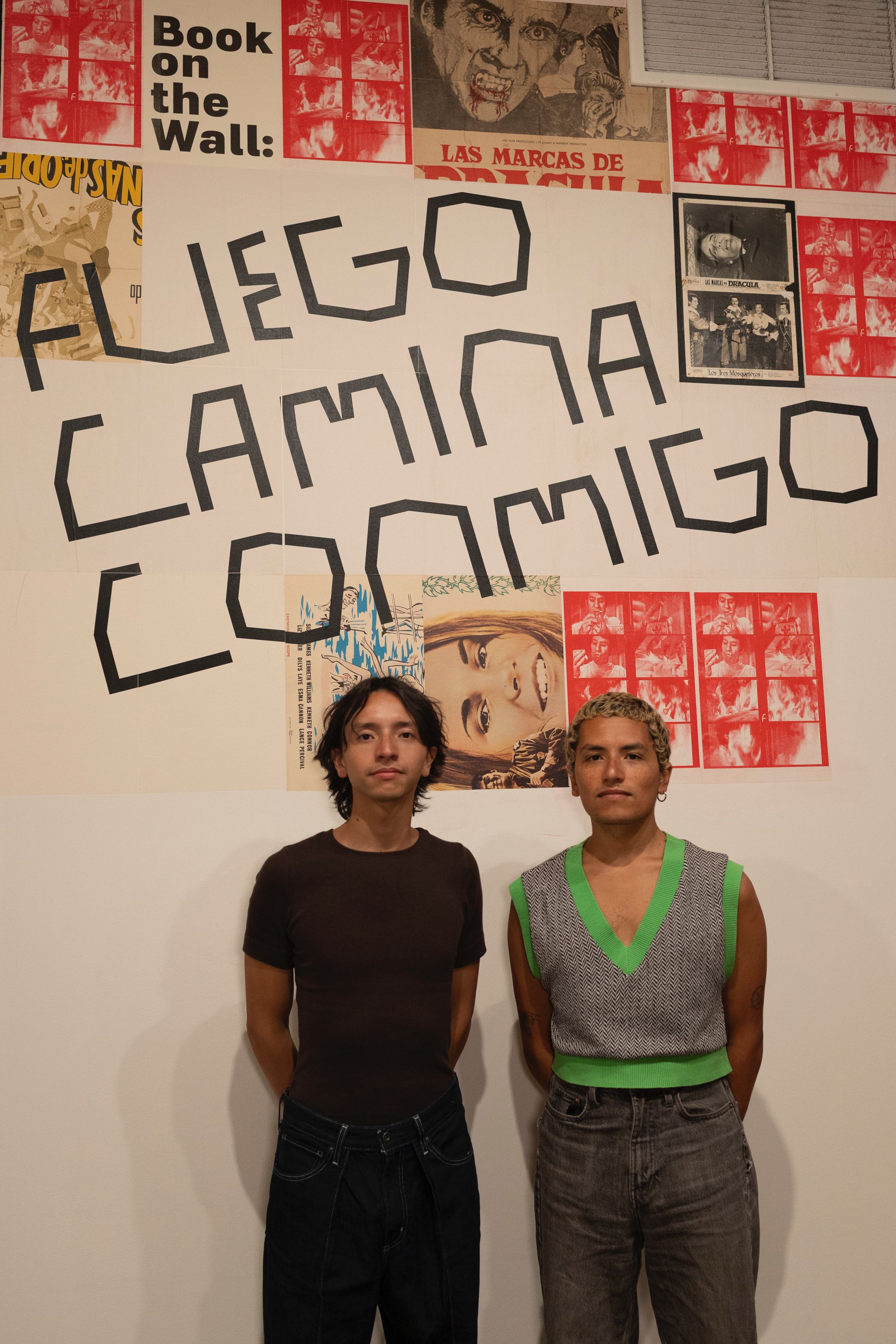
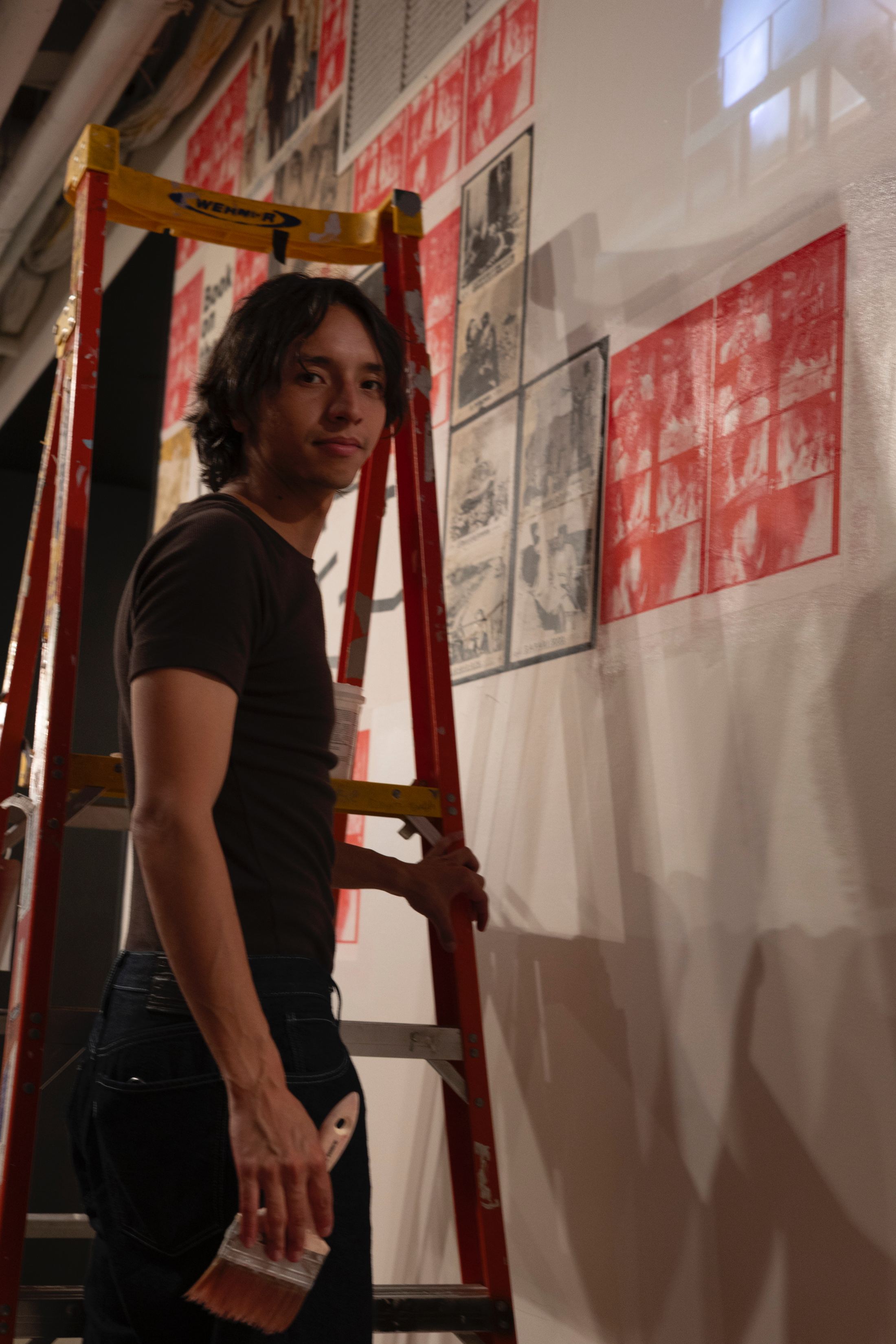
Fuego Camina Conmigo is a project we made with La Burra Riso, who is a Riso printing press in Medellín. It's a co-edition we made with them from an archive they found, like, five years ago — from original printings of lobby cards. These are the cards that were exhibited outside theaters to promote movies. They are all original printings, and we made 300 copies of the book. What you see on the wall is a translation of that material — the material we had left behind from the 300 copies.
-How did the archive come onto your radar?
We used to work a lot with them. We are friends, and they are always inviting us to make projects with them. A friend of theirs had this archive and didn't know what to do with it, so they traded that archive for a bicycle and stored it for five years. Then they asked us if we wanted to make something with it with them.
And immediately we hear that this material shouldn't exist because after a movie theater received the distribution materials for a film, they were commanded to destroy everything after the projection of the movies. The easy way was to set it on fire, because the materials are flammable. So we thought the best idea was to think about how we can represent fire in the printing — in the back of the original prints. It’s a publication about the different ways fire enters cinema, and the relation between fire and motion images. We sat with all these, like, 10,000 copies of original prints and started selecting them — discarding the damaged ones, to start looking for the covers of the books, creating relationships between the images. Then the printing with them, then the final binding of the book. That was the whole process.
-Did you burn something as part of the project?
Yes. At the launch of the book in Medellín — that was one year ago, April 2025 — we made this exhibition launch in Medellín and we burned many of the copies we had left behind from the copies of the book.
The actual exhibition had five components. There are Riso prints we made with La Burra Riso — small stills from a movie called The Written that we love. We think it represents the idea of burning cinema. We have copies of the lobby cards. We have posters from the movie. We have a video — a kind of collage of different movies we love, we think they represent the idea of fire in cinema. The four of us selected among like ten movies and we cropped different parts of the movie where there is fire, and made a whole video that is going to be projected on the wall. And on the wall there is also the book, Fuego Camina Conmigo.
But when we were asked to bring the project here to ICP, we wanted it to be translated. The book is the lobby cards, but at the end you found a text in Spanish about the relation of these images and the burning, etc. We didn't want it to be easy, to just print the text and insert it, so we decided to make a new edition in the shape of a set of matches. So you will find the book, and next to it, a matchbook — the text translated to English and a square crop of an original lobby card.
-What years were the movies from? Were they Spanish films or worldwide?
Worldwide, all kinds. The lobby cards are from the '60s, '70s, and '80s — drama, romance, horror, comedy, porn movies, all kinds of genres. And the stills we printed on the back, the ones with the flames, are from the 1920s to today.
-Tell us about Réplica Ediciónes — how it started, what it is.
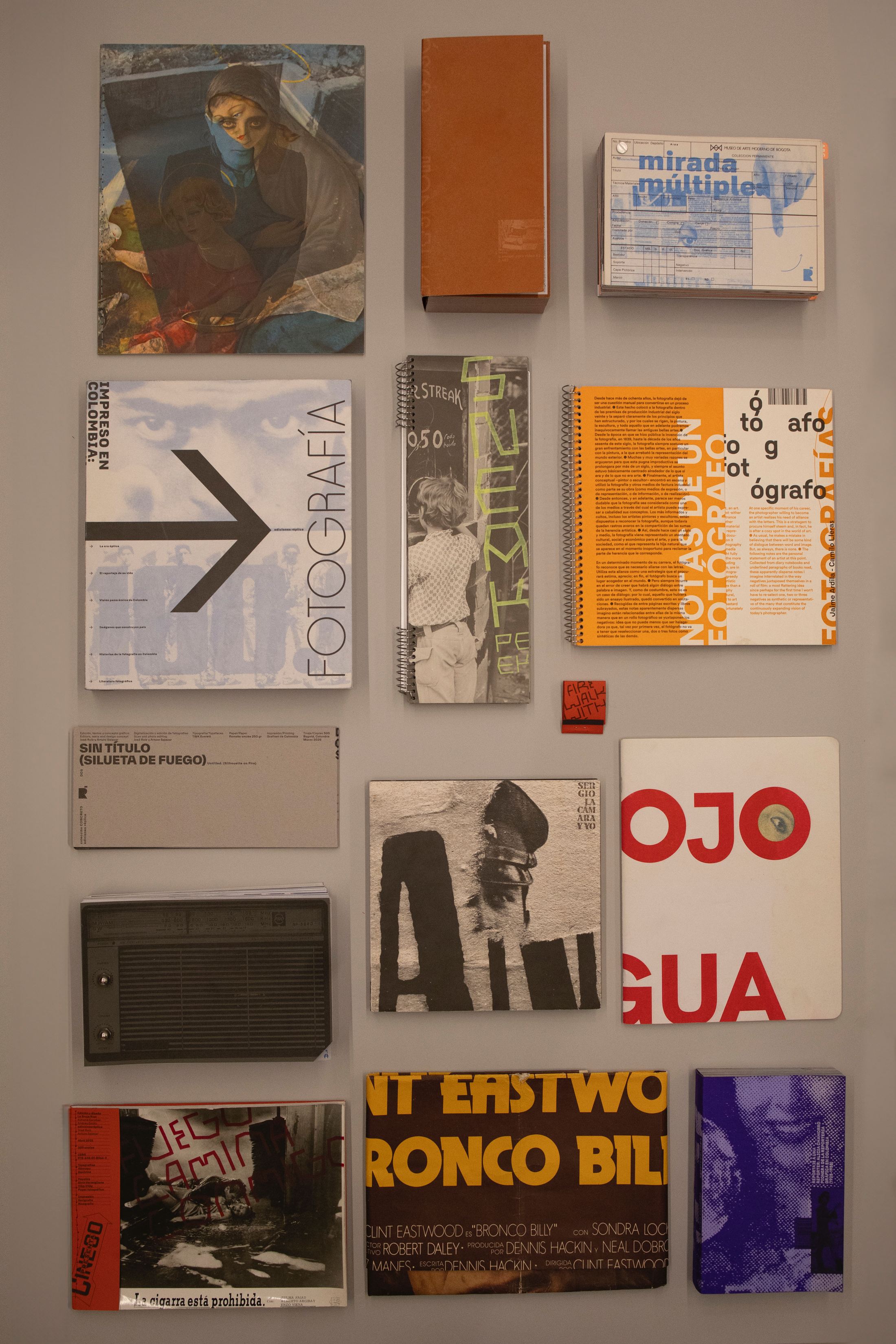
The name of the project is Ediciónes Réplica. We think of it as an investigation project before it is an editorial project, because the investigations we make sometimes transform into books and sometimes into exhibitions. It began like six years ago, between an interest we had in books and an interest in photography — and the perfect combination of both is the photobook. We have published around 25 titles. I think seven have had an exhibition as well.
Our very first book and exhibition was actually related to New York. In 2021 we were looking for books on the streets in Bogotá and we found an original catalog of the Family of Man exhibition that was made at MoMA in 1955. We were intrigued by the two photos taken in Colombia that were included in the exhibition, and we started looking for those photos and the photographers who took them.
And we found a document in MoMA's archive that says the exhibition, they made four copies to travel the world, and the fourth copy traveled to Latin America to support right-hand, military governments at that time. Colombia was included in the exhibition display — Cuba, Guatemala, Venezuela, Colombia, Chile, Uruguay. And we asked ourselves: why is there no record in Colombian photographic history that the exhibition came? Because Family of Man is one of the most important photographic exhibitions of the last century. Why is no one talking about this?
Long story short — we found out the exhibition actually came to Colombia, but it arrived during a massive social strike to defeat our dictator, Gustavo Rojas Pinilla. After that strike the country was in a very strange moment, and the exhibition came, but no one ever took it from the crates it was traveling in. It’s a funny story because we can say that the most important photographic exhibition of the 20th century went to Colombia, but no one saw it.
That became the foundation of a book called A Photograph Meant to Be: The Family of Man in Bogotá, and an exhibition we made thinking about how this exhibition could be done 60, 70 years later, but using the work of Latin American photographers.
-Even though the exhibition never opened, did the catalog find its way into Colombia? Was it still influential?
Yeah, of course. When we have worked with other photographers we always told them this story, they always say, "Yes, I went to New York in the seventies and bought the catalog," or "I asked a friend to bring back photos from the exhibition." Many Latin American photographers have this exhibition very clear in their minds because it's a way to relate to their own images — to think how these categories in the exhibition are useful for understanding their own work.
-How did you know, with that first project, that you wanted to keep doing this?
I don't think at that moment we had it clear, the direction the project was going to take. But we knew we wanted to look at archives and make things with them — exhibitions, performances, books. I think that first exhibition kind of made a path. We found many photographers who were influenced from the Family of Man system of photography, and it was interesting how in the following years they start appearing in the investigations we started making — in their own archives.
-How would you describe yourselves? You're a mixture of artists, investigators, historians, narrators?
We studied art back in Colombia, and we like to think of ourselves as a kind of detectives — printing material detectives. So we are collectors. We like to collect, collect, collect, all types of printed materials: posters, books, ephemera, postcards, newspapers, boxes, magazines, all kinds. And in that collecting, we always ask ourselves how this archive can be displayed in a way that not only shows the importance of it, but lets the user continue using the material. That's why we like, most of the times, to use original materials in the publications, in the exhibitions, and in the projects we make.
We like to think that the materials we collect are not just collection items for a museum or an institution. You can buy it, you can find it in a book, you can use it to reprint, and this is because as designers slash artists, we think that when you start working with a blank screen and designing a book or a poster, it's different from when you decide to design something that is going to be printed on something that has already been designed. We like to start conversations with the people who were involved in the production, in the design, in the printing of that thing. It is a recognition of their work.
Also — neither of us studied design. We just read books and, like, kind of learned to design by watching the books we like. In that way, when we make exhibitions, we like to think of the world as a canvas when we design a page. In one exhibition we have on display right now at the Museum of Modern Art in Medellín, we thought of the museum walls as the pages of the catalog of the exhibition. You can find letters and text definitions throughout the whole space.
We don't like to think that design is something apart from the investigation, apart from the bookmaking. We like to think they are all connected. The shape of the book, the weight, the smell — everything from the object has to respond to the investigation, to the content.
-You mentioned the Museum of Modern Art in Medellín — can you tell us about your work with the museums in Colombia and what else you have coming up?
At the moment we have the Open Signal exhibition at the Museum of Modern Art in Medellín. We also collaborate with a gallery in Bogotá called Espacio El Dorado, which has a strong focus on photography — after we return to Bogotá next week, we are going to install two exhibitions there.
And there is another project we made with the photographic archive of the Museum of Modern Art in Bogotá — not Medellín. We were invited by Susana Vargas, who created an education project in museums, to do a residency focused on an editorial project. So we worked with the photographic archive and made a catalog that can also be displayed in space. We selected around 400 to 500 photographs from the archive that tell the whole story of the museum from the '60s to about 1992, 1993, in photographs.
After Bogotá, we have an exhibition in Buenos Aires at a library and gallery space called Atlas, run by Martín Polatti. It's a book that has the shape and the idea of a remote control — about how you can control images using one device. That's the main concept, and we are still working on it.
-You mentioned not studying design — what was the experience of actually figuring out how to print a photo book? How difficult was it?
We like to say that our books don't have a PDF. You couldn't find a virtual file version of any of our books — just in one case, but in most cases, no. Because we like to think a lot about the materiality of the book, in the way the book will develop over time.
For example, one book we made about three years ago, Notas de un Fotógrafo, was very funny because it has two binding systems. On one hand, you have the spiral, and on the other, the signatures — the sewn binding. As it has two different kinds of binding in the same book, when we designed it on screen, we had to design it upside down. We told the printer we needed to print an upside down book, and the printer was okay with that. And when they gave us the copies back, we told them we needed to cut it in half — because the book opens in the middle, not at the edge, because of the two binding systems.
We are always challenging the people who work with us — sending them upside down files, telling them to cut it in half, asking them to print in ways they haven't done before. And that's because, as you saw it, the designs respond to a very fine conceptualization process. We make some decisions that seem very simple but have all the meaning of the book.
-Can you tell us about three books you are most proud of?
The first is Unidad Mínima. We like to think about books as objects and how they can relate to an object we see every day. We were working with the archive of Óscar Monsalve, a photographer who specialized in documenting artworks and museums — he worked almost three decades for the Museum of Modern Art in Bogotá. We were going to his house every day for two years. Everyone knows Óscar Monsalve as the photographer for artworks, but that's only one part of his work. We started discovering this unpublished archive — performances, happenings, ephemeral actions made by artists in Colombia during the '80s. The part of his archive he never published.
We found this photographic recording of something in the '70s: he documented the making of a brick. And we thought — how do you translate four decades of work into a book? The brick responds to that. The book has the size and the color of a brick. It's like a whole index — you can read it page by page, or you can move through it in different ways and recognize the history of Colombian artists through a photographer's view.
The second is Impreso en Colombia — Printed in Colombia. It's a research we made over five years, looking for printed material with photographic content: newspapers, books, magazines, ephemera, all printed in Colombia. We don't like the category "photobook" to refer to all of that material — most of that material wasn't made for that purpose. So we analyzed how photography creates memories in people, and we developed a research of 452 publications made in Colombia during the 20th century, organized into five groups: political history, geography, the idea of progress and architecture, a review of how the history of photography in Colombia has been written, and finally the most radical experiments — artists and photographers in the '70s and '80s who later became the idea of the photobook.
A very important aspect is that each chapter starts with an original page — an original sheet from one of the books in that chapter. We found many original copies of the same books and took them to be cut and used the pages as chapter dividers. This was a very contested idea, because most of these researchers believe these books are just collector's items, just for people who can pay a lot of money. The idea of cutting the originals was a response to that.
The third is our most recent, published in December — Reportaje a una Reportera, which means interview with a female reporter, Alicia Chamorro. She is the pioneer of female photojournalists in Colombia, and she was completely unknown. When we were doing the investigation for Impreso en Colombia, we found a small book published in 1948 — one of the first books in Colombia with almost all photographic content. The copy we found had an envelope inside with original prints from the book. On the back of each print was a stamp: Alicia Chamorro, Reportera Gráfica. And we asked ourselves: who is this woman, and why do we not know her at all?
We tracked down her son, who lives in Paris, and he didn't have anything from her archive — but he recommended we contact her sister, who lives in Bogotá. She is 93 years old. We came to her apartment, and to our surprise she had spent her whole life keeping six family albums with much of the work Alicia made in the '30s, '40s, and '50s. We think this book is part of the way for her to become known, to put her in the history books. Between the dogs and the mountain landscapes there were five presidents, people who went to fight in Korea in the '50s, the elections, earthquakes, floods, different personalities from other countries. She traveled a lot through south of Colombia and north of Ecuador and she made these amazing photographs.
The story is amazing but also very sad because she died at 33 years old — the theory we have is that she was very experimental, and she started working with color photography and 3D photography, a process that was very toxic. She developed lupus and died in 1957. But in her short life she made this amazing work, and we think this will be our most important book — because it is such an honor to put someone's name in history.
-Before Réplica, there was a project around Gráficas Molinari. Can you tell us about that?
Before Réplica, I started research about a printing company established in Cali in the '50s called Gráficas Molinari. They specialized in producing popular images — very cheap, for everyone: Animals, religious images, landscapes, all kinds of images that you could put on the wall in your house or carry in your wallet. Colombia is a very religious country, so all the saints, all kinds of imagery.
I started this research because I was working with artists from the '60s, '70s, and '80s who used these images in their work — cutting them, or painting them, using them on movies, or photographing them. Everyone knew these images came from Cali, but no one knew who made them. I was very intrigued: who was the responsible person behind all of this?
I went to Cali and asked and asked and asked. And I found a storage space with the leftovers of Gráficas Molinari — a company established in 1952 by Antonio Molinari, a Spanish guy who came to Colombia because of the war. He printed for the whole continent: Venezuela, Ecuador, Peru, Panama, Mexico. I think all Latin Americans are related to this kind of imaginary because it's so kitsch, so popular, so pop, so strange, so colorful. We all have a grandmother or an aunt, someone who had those images on their wall.
After I found the storage and could access the material, the person who had it told me he wanted to burn it because he didn't know what to do with it. So I collected everything, brought it to Bogotá, and started this project — using the original prints to create other publications, books, exhibitions, performances, to put them back into use.
-Are you obsessive people? Are you very detail-oriented?
We are so obsessive. As we said — we like to collect a lot of material. We are very intricate about every small printed thing. We are very obsessive in all of the process: the collecting, in the design, the distribution, the way the books start to circulate. We are very very obsessive and crazy people.
And we like to walk a lot. Our joke is that we are always walking any city carrying things we found. It's a very obsessive way to live.
-Do you have a storage unit somewhere, just for all of this?
Yes, but it's very interesting because we collect many, many, many things, but as we collect, we redistribute. We collect in order to distribute. That's how the circle keeps going. And you can see it in many of our books — we use the collected material inside the books themselves, original sheets, so that the people who buy them also have the experience of touching the material the way we do every day.
-Are any of your books for sale at the book fair?
Yes, we brought eight bags full of books for the Photobook Fest. Some are sold out — the Family of Man book is sold out and we are working on a second edition. But the others are here. And actually the most recent project is not Reportaje a una Reportera — it's a small book we brought specifically for the fair called The First Collection. It began when we showed Unidad Mínima to a friend, and he received it and said, "The thing the brick is missing is the concrete — the paste between the bricks." We thought about that for two years, and said we needed a concrete book. It's a collection of happenings and performances, each a series of six or seven photos that spread in three meters. The paper, the material — everything relates to concrete. You can find that book at the Photobook Fest this week.
Replica Ediciones: @ediciones.replica
The founders
José Ruiz: @se_hacen_publicaciones/
Arturo Salazar: @arturosalazarg/
ICP: @icp
DP: @jamesmaherphoto @session_press
-ICPの「Book on a Wall」展『Fuego Camina Conmigo』について、まずご紹介いただけますか?
『Fuego Camina Conmigo』は、メデジンにあるリソグラフ印刷スタジオ「La Burra Riso」と一緒に制作したプロジェクトです。彼らとの共同出版になります。 このプロジェクトは、彼らが約5年前に見つけたアーカイブから始まりました。映画館のロビーに展示されていたロビーカードのオリジナル刷りが大量に残されていたんです。映画を宣伝するために劇場の外に掲示されていたカードですね。
それらはすべて当時のオリジナル印刷物で、私たちはそこから300部限定の本を制作しました。今回壁に展示されているものは、その300冊の制作後に残された素材を、別のかたちへ翻訳したものです。
-そのアーカイブはどのように見つかったのでしょうか?
私たちは以前からLa Burra Risoとよく一緒に仕事をしていて、友人同士でもあります。彼らはいつも何か新しいプロジェクトに誘ってくれるんです。彼らの友人がそのアーカイブを持っていたのですが、どう扱えばいいかわからず、自転車と交換して手に入れたそうです。そして5年間保管していました。その後、「これを使って何かできないか」と私たちに声をかけてくれたんです。私たちはすぐに、「本来この素材は存在してはいけないものだ」と感じました。
映画館には配給会社から宣伝素材が送られますが、上映終了後にはすべて破棄するよう指示されていたそうです。最も簡単な処分方法は燃やすことでした。素材は可燃性だったので。だから私たちは、「印刷の中で火をどう表現できるか」を考え始めました。特に、オリジナルプリントの裏面に現れる焼け跡のような痕跡に興味を持ちました。この出版物は、「火」がどのように映画の中に入り込むのか、そして火と映像の関係について扱った本でもあります。私たちは約1万枚にも及ぶオリジナルプリントを前に、一枚ずつ選別していきました。傷んだものを除外しながら、本の表紙候補を探したり、イメージ同士の関係性を組み立てたりしていったんです。その後、La Burra Risoと一緒に印刷を行い、最終的に製本しました。それがこの本の制作プロセスでした。
-このプロジェクトの一部として、実際に何かを燃やしたのでしょうか?
はい。2025年4月、メデジンで本のローンチを行った際に、展示形式で発表しました。その時、本を制作したあとに残っていたロビーカードの一部を実際に燃やしました。
-今回の展示はどのような構成になっていますか?
展示は5つの要素で構成されています。まず、La Burra Risoと制作したリソグラフプリントがあります。私たちが大好きな『The Written』という映画の小さなスチルイメージで、「燃える映画」というアイデアを象徴していると思っています。さらに、オリジナルのロビーカード、映画ポスター、そして映像作品も展示しています。映像は、私たち4人が選んだ約10本の映画から、火が登場する場面だけを切り取り、コラージュのようにつなぎ合わせたものです。それを壁面に投影しています。そして壁には、『Fuego Camina Conmigo』の本そのものも展示されています。
ただ、ICPでこのプロジェクトを展示することになった時、私たちは「翻訳」された形にしたいと考えました。本自体がロビーカードによって構成されていますが、最後には、それらのイメージと「燃焼」の関係について書かれたスペイン語のテキストが収録されています。単純に英訳テキストを印刷して差し込むだけにはしたくありませんでした。そこで、新しい版として「マッチ箱」の形をしたものを制作することにしたんです。なので、展示では本の隣にマッチブックがあります。そこには英訳されたテキストと、オリジナルのロビーカードを正方形にトリミングしたイメージが収められています。
-これらの映画はどの時代の作品なのでしょうか? スペイン語圏の映画ですか、それとも世界各国の映画ですか?
世界各国のさまざまな映画です。ロビーカードは1960〜80年代のもので、ドラマ、ロマンス、ホラー、コメディ、ポルノ映画など、あらゆるジャンルが含まれています。そして裏面に印刷した炎のスチルイメージは、1920年代から現代までの映画から選ばれています。
-Réplica Ediciónesについて教えてください。どのように始まり、どんな活動をしているのでしょうか?
プロジェクト名は「Ediciónes Réplica」です。私たちはこれを、単なる出版プロジェクトというより、まず“リサーチ・プロジェクト”として考えています。というのも、私たちが行う調査や探求は、時に本になり、時に展覧会になるからです。活動は約6年前に始まりました。本への興味と写真への興味、その両方が重なった時、最も自然な形としてフォトブックにたどり着いたんです。これまでに約25冊を出版してきました。そのうち7冊ほどは展覧会にも発展しています。私たちの最初の本と展覧会は、実はニューヨークに関係するものでした。
2021年、ボゴタの路上で古本を探していた時に、1955年にMoMAで開催された《The Family of Man》展のオリジナルカタログを見つけたんです。
私たちは、その展覧会に含まれていたコロンビアで撮影された2枚の写真に強く惹かれ、その写真や撮影した写真家について調べ始めました。するとMoMAのアーカイブで、「展覧会は世界巡回のために4セット制作され、そのうち第4セットは当時の右派軍事政権を支援する目的でラテンアメリカを巡回していた」という記録を見つけました。巡回先にはキューバ、グアテマラ、ベネズエラ、コロンビア、チリ、ウルグアイなどが含まれていました。そこで私たちは疑問に思ったんです。
「なぜコロンビア写真史の中に、この展覧会が来た記録が存在しないのだろう?」と。
《The Family of Man》は20世紀で最も重要な写真展のひとつです。それなのに、なぜ誰も語っていないのか。
簡単に言うと、その展覧会自体は実際にコロンビアまで来ていたんです。しかし、その時期は独裁者グスタボ・ロハス・ピニージャ政権に対する大規模な社会ストライキの最中だったんです。ストライキ後、国全体が非常に混乱した状況にあり、展覧会は到着したものの、輸送箱から一度も取り出されることはありませんでした。つまり、「20世紀で最も重要な写真展がコロンビアに来たにもかかわらず、誰にも見られなかった」という、とても残念な出来事だったんです。
そのリサーチは、後に『A Photograph Meant to Be: The Family of Man in Bogotá』という本と、展覧会へと発展しました。私たちは、「もしこの展覧会が60〜70年後の現在に実現されるなら、どのようなものになるだろうか」と考え、ラテンアメリカの写真家たちの作品を用いて再構成を試みました。
-実際には展覧会は開かれなかったわけですが、カタログ自体はコロンビアに流通していたのでしょうか? 何らかの影響はあったのでしょうか?
ええ、もちろんです。他の写真家たちと仕事をする際にこの話をすると、多くの人が「70年代にニューヨークへ行ってカタログを買った」とか、「友人に頼んで展覧会の写真を持ち帰ってもらった」と話してくれます。
多くのラテンアメリカの写真家たちは、この展覧会を非常によく記憶しています。というのも、自分たちの写真を考えるための参照点として、《The Family of Man》のカテゴリーや構成が役立っていたからです。つまり、自分たちの作品を理解するためのひとつの方法として、この展覧会が存在していたんです。最初のプロジェクトの時点で、「これを続けていきたい」と感じていたのでしょうか?
その時点では、まだプロジェクトがどこへ向かうのか、自分たちでもはっきりとは分かっていなかったと思います。ただ、アーカイブを見つめ、それを使って何かを作りたいという気持ちはありました。展覧会、パフォーマンス、本など、さまざまな形で。でも、あの最初の展覧会が、ある意味でひとつの道筋を作ってくれたんです。《The Family of Man》的な写真のシステムに影響を受けた写真家たちを多く発見しましたし、その後数年間のリサーチの中でも、彼らが再び現れてくるのが興味深かったです。しかも今度は、彼ら自身のアーカイブの中から。
-ご自身たちをどのように捉えていますか?
アーティスト、リサーチャー、歴史家、語り手……さまざまな側面があるように感じます。
私たちはコロンビアで美術を学びました。そして、自分たちのことを“印刷物の探偵”のように考えるのが好きなんです。つまり、私たちはコレクターなんです。ポスター、本、エフェメラ、ポストカード、新聞、箱、雑誌など、あらゆる印刷物を集め続けています。そして、その収集行為の中で常に考えているのは、「このアーカイブをどう展示すれば、その重要性を示すだけでなく、見る人が引き続き使えるものになるのか」ということです。だからこそ、私たちはできる限り、オリジナル素材そのものを出版物や展覧会、プロジェクトの中で使いたいと考えています。
私たちは、集めた素材を単なる“博物館や機関のための収蔵品”としては考えていません。
それは購入できるものでもあり、本の中で見つけられるものでもあり、再印刷にも使えるものです。
というのも、デザイナーでありアーティストでもある私たちは、真っ白な画面から本やポスターをデザインすることと、すでに誰かによってデザインされたものの上に新たなデザインを重ねることは、まったく違う行為だと考えているからです。私たちは、その印刷物の制作やデザイン、印刷に関わった人々と対話を始めたいんです。それは彼らの仕事への敬意でもあります。
それに、私たちは二人ともデザインを正式に学んだわけではありません。
ただ本を読み、好きな本を見続けながら、自然とデザインを学んできました。
だから展覧会を作る時も、ページをデザインするように世界そのものをキャンバスとして捉えるのが好きなんです。現在メデジン近代美術館で開催している展覧会では、美術館の壁を展覧会カタログのページとして考えました。空間全体に文字やテキストの定義が散りばめられています。
私たちは、デザインをリサーチや本作りから切り離されたものだとは考えていません。
すべてはつながっていると思っています。
本の形、重さ、匂い――オブジェクトに関わるすべてが、そのリサーチや内容に応答しているべきなんです。
-先ほどメデジン近代美術館について触れられていましたが、コロンビアの美術館との活動や、今後の予定について教えてください。
現在、メデジン近代美術館では《Open Signal》という展覧会を開催しています。
また、ボゴタにある「Espacio El Dorado」というギャラリーとも協働しています。写真に強くフォーカスしたスペースで、来週ボゴタへ戻った後、そこで2つの展覧会を設営する予定です。
さらに、ボゴタ近代美術館(メデジンではなく)の写真アーカイブを用いた別のプロジェクトも進めました。美術館教育プロジェクトを立ち上げたスサナ・バルガスに招かれ、出版プロジェクトを中心としたレジデンシーを行ったんです。そこで私たちは写真アーカイブと向き合い、空間展示も可能なカタログを制作しました。1960年代から1992〜93年頃までの美術館の歴史を語る、約400〜500点の写真を選んで構成しています。
ボゴタでの展示の後には、ブエノスアイレスでの展覧会も予定されています。
会場は、マルティン・ポラッティが運営する「Atlas」という図書館兼ギャラリースペースです。
現在制作中の本は、リモコンの形をしています。「ひとつの装置を通して、どのようにイメージをコントロールできるのか」というアイデアが中心になっています。
それがこのプロジェクトの核となるコンセプトで、今も制作を続けているところです。
-デザインを学んでいないとおっしゃっていましたが、実際にフォトブックを印刷・制作していく過程はどんな経験でしたか? 難しくなかったのでしょうか?
私たちはよく、「自分たちの本にはPDFが存在しない」と言っています。
つまり、私たちの本の多くには、デジタル上で完結した“仮想ファイル”のようなものがありません。例外は一冊だけで、ほとんどの場合は存在しないんです。というのも、私たちは本の“物質性”についてとても強く意識しているからです。本というものが、時間とともにどのように変化し、存在していくのかを大切にしています。例えば、3年ほど前に制作した『Notas de un Fotógrafo』という本は、とてもユニークな構造をしています。片側はスパイラル綴じ、もう片側は糸かがり綴じになっているんです。
ひとつの本の中に2種類の製本方法が存在しているため、画面上でデザインする際には、本全体を上下逆さまに設計しなければなりませんでした。私たちは印刷所に「逆さまの本を印刷したい」と伝えましたが、印刷所は問題なく対応してくれました。そして刷り上がった後には、「これを真ん中で半分に裁断してください」とお願いしたんです。
なぜなら、この本は端から開くのではなく、中央から開く構造になっているからです。2種類の製本方式が共存しているために。
私たちは常に、一緒に仕事をする人たちに新しい挑戦を投げかけています。
逆さまのデータを送ったり、「半分に切ってください」とお願いしたり、これまでやったことのない方法で印刷してもらったり。
-でもそれは、あなたも感じたように、デザインが非常に繊細なコンセプト形成のプロセスに応答しているからなんです。
一見シンプルに見える決定でも、本の意味そのものに深く関わっています。特に誇りに思っている3冊について教えてください。
1冊目は『Unidad Mínima』です。私たちは、本を“オブジェクト”として捉え、日常の中にある物との関係性についてよく考えています。
この本では、オスカル・モンサルベという写真家のアーカイブに取り組みました。彼はボゴタ近代美術館で約30年にわたり、美術作品や美術館の記録撮影を専門としていた写真家です。私たちは2年間、ほぼ毎日のように彼の家に通っていました。
多くの人は、彼を“作品撮影の写真家”として知っていますが、それは彼の仕事のほんの一部にすぎませんでした。調査を進めるうちに、1980年代のコロンビアで行われたパフォーマンスやハプニング、儚いアクションなどを記録した未発表のアーカイブが次々と見つかっていったのです。彼自身が一度も公表してこなかった部分でした。
その中で、1970年代に彼が“レンガ作り”の工程を撮影していた記録を見つけました。そして私たちは考えました。──40年にわたる仕事を、一冊の本としてどう翻訳できるのだろうか、と。
その答えとして生まれたのが、この“レンガ”のような本です。本自体がレンガと同じサイズ、同じ色をしています。ページを順番に読むこともできますし、別の方法で行き来しながら見ることもできる。写真家の視点を通して、コロンビアのアーティストたちの歴史をたどっていける、一種のインデックスのような存在になっています。
2つ目は『Impreso en Colombia(Printed in Colombia)』です。
これは、私たちが5年をかけて行ったリサーチ・プロジェクトで、コロンビアで印刷された“写真を含む印刷物”を調査したものです。新聞、書籍、雑誌、エフェメラなど、あらゆる印刷物が対象になっています。
私たちは、“フォトブック”というカテゴリーだけで、それらすべてを括ることに違和感を持っていました。というのも、その大半は、そもそも“フォトブック”として作られたものではなかったからです。
そこで私たちは、写真がどのように人々の記憶を形成していくのかを考えながら、20世紀のコロンビアで制作された452点の出版物を調査しました。そしてそれらを、政治史、地理、進歩や建築という概念、コロンビア写真史がどのように書かれてきたかという視点、そして最後に、後に“フォトブック”的なものへとつながっていく、1970〜80年代のアーティストや写真家たちによる最も実験的な試み、という5つの章に分類しています。
この本でとても重要なのは、各章の冒頭に“オリジナルのページ”が挿入されていることです。私たちは同じ本の複数のオリジナル・コピーを探し集め、それを実際に裁断し、そのページを章扉として使用しました。
これは非常に議論を呼んだアイデアでした。多くの研究者やコレクターたちは、こうした本を“高額で購入できる人だけのコレクターズ・アイテム”として扱っているからです。
私たちにとって、オリジナルを切るという行為そのものが、その価値観に対する応答でもありました。
3冊目は、昨年12月に出版した最も新しい本、『Reportaje a una Reportera(女性記者へのインタビュー)』です。主人公はアリシア・チャモロ。コロンビアにおける女性フォトジャーナリストの先駆者とも言える存在ですが、長いあいだ完全に忘れ去られていました。
『Impreso en Colombia』のリサーチをしていた時、私たちは1948年に出版された小さな本を見つけました。コロンビアで初めて“ほぼ全編が写真で構成された本”のひとつです。その本の中には封筒が挟まっていて、そこにオリジナル・プリントが入っていました。そしてプリントの裏には、『Alicia Chamorro, Reportera Gráfica(アリシア・チャモロ、写真記者)』というスタンプが押されていたのです。
私たちは考えました。──この女性はいったい誰なのか。なぜ私たちは彼女のことを何も知らないのか、と。
その後、パリに住む彼女の息子を探し出しました。ただ、彼は母親のアーカイブを何も持っていませんでした。その代わりに、ボゴタに住む彼女の妹を紹介してくれました。彼女は当時93歳でした。
私たちが彼女のアパートを訪れると、驚くべきことに、彼女は生涯をかけて6冊の家族アルバムを大切に保管していました。そこには、アリシアが1930〜50年代に撮影した数多くの作品が収められていたのです。
私たちは、この本が彼女の存在を世に知らしめ、歴史の中にその名前を刻むための一歩になると考えています。
犬や山岳風景の写真の間には、5人の大統領、1950年代に朝鮮戦争へ向かった人々、選挙、地震、洪水、海外から訪れた著名人たちなど、さまざまな記録が残されていました。彼女はコロンビア南部からエクアドル北部まで広く旅をしながら、本当に素晴らしい写真を撮っていたのです。
この物語は驚くべきものであると同時に、とても悲しいものでもあります。彼女はわずか33歳で亡くなりました。私たちの推測では、彼女は非常に実験的な写真家で、当時まだ危険性が知られていなかったカラー写真や3D写真にも取り組んでいました。その制作過程で使用される化学物質は非常に有毒だったのです。
彼女はループスを発症し、1957年に亡くなりました。
けれど、その短い人生の中で、彼女は本当に驚くべき仕事を残しました。そして私たちは、この本こそが自分たちにとって最も重要な出版物になるのではないかと思っています。なぜなら、誰かの名前を歴史の中に戻すことほど、光栄なことはないからです。
-Réplica以前には、「Gráficas Molinari」に関するプロジェクトもされていましたよね? その話を聞かせてください。
Réplica以前、私は1950年代にカリで設立された印刷会社「Gráficas Molinari」について調査していました。
彼らは非常に大衆的なイメージを大量に制作していた会社でした。とても安価で、誰もが手にできるものです。動物、宗教画、風景など、家の壁に飾ったり、財布に入れて持ち歩いたりできるようなイメージですね。コロンビアはとても宗教色の強い国なので、聖人画なども数多く作られていました。
この調査を始めたきっかけは、1960〜80年代のアーティストたちが、そうしたイメージを作品の中で使っていたからです。切り抜いたり、上から描き込んだり、映画に登場させたり、再撮影したり。
誰もが「それらのイメージはカリから来ている」と知っていましたが、実際に誰が作っていたのかは誰も知らなかったんです。
私はとても気になりました。
「この膨大なイメージ群の背後にいた人物は誰だったのだろう?」と。
私はカリへ行き、ひたすら人に聞き続けました。
そしてついに、Gráficas Molinariの残された印刷物が保管されている倉庫を見つけたんです。
この会社は1952年、戦争を逃れてコロンビアへ渡ったスペイン人、アントニオ・モリナリによって設立されました。彼はベネズエラ、エクアドル、ペルー、パナマ、メキシコなど、ラテンアメリカ全域へ向けて印刷物を供給していました。
私は、ラテンアメリカの人々は皆、こうしたイメージ世界とどこかで結びついていると思っています。
とてもキッチュで、大衆的で、ポップで、奇妙で、色彩に満ちている。
きっと誰にでも、そういう絵を壁に飾っていた祖母や叔母がいるはずなんです。倉庫を見つけて中の資料にアクセスできるようになった時、保管していた人が、「どうしていいかわからないから、全部燃やしたい」と言いました。だから私はすべてを引き取り、ボゴタへ運び、このプロジェクトを始めたんです。
オリジナルプリントを使って、新しい出版物や本、展覧会、パフォーマンスを制作し、それらを再び“使われるもの”として循環させるために。
-お二人はかなり執着心の強いタイプですか? とても細部にこだわる印象があります。
かなり執着心は強いと思います。先ほども言ったように、私たちは大量の素材を集めるのが好きなんです。
あらゆる小さな印刷物に対して、とても細かく注意を払っています。収集、デザイン、流通、本がどのように人々の手に渡っていくか――そのすべてのプロセスに強い執着があります。本当に、ちょっと狂っているくらいです。
それに、私たちはとにかくよく歩きます。冗談みたいによく言うんですが、どこの街へ行っても、見つけたものを抱えて歩き回っているんです。ある意味、かなり偏った生き方ですよね。
-そうしたものを保管するための倉庫も持っているんですか?
はい。でも面白いのは、私たちはたくさんのものを収集する一方で、同時に再分配もしているということです。私たちは“配るために集めている”んです。
そうやって循環が続いていきます。そして、それは私たちの本にもよく表れています。
集めたオリジナル素材そのものを本の中に使用しているので、本を手にした人たちも、私たちが日々触れている素材に実際に触れることができるんです。
-今回のブックフェアでは、本も販売されているんですか?
はい。Photobook Festのために、バッグ8個分の本を持ってきました。
すでに売り切れているものもあります。『The Family of Man』の本は完売していて、現在第2版を準備中です。
それ以外の本は会場で販売しています。
そして実は、最新作は『Reportaje a una Reportera』ではないんです。
今回のフェアのために特別に持ってきた、小さな本『The First Collection』が最新作になります。
この本は、『Unidad Mínima』をある友人に見せたことから始まりました。彼は本を見て、「このレンガに欠けているのはコンクリートだね。レンガ同士をつなぐセメントだ」と言ったんです。私たちはその言葉を2年間ずっと考え続けました。そして、「コンクリートの本を作らなければ」と思ったんです。
この本には、ハプニングやパフォーマンスの記録が収められています。それぞれ6〜7枚ほどの写真シリーズで構成されていて、広げると3メートルほどの長さになります。紙や素材感も含めて、“コンクリート”という発想から作られています。その本も、今週のPhotobook Festで紹介しています。