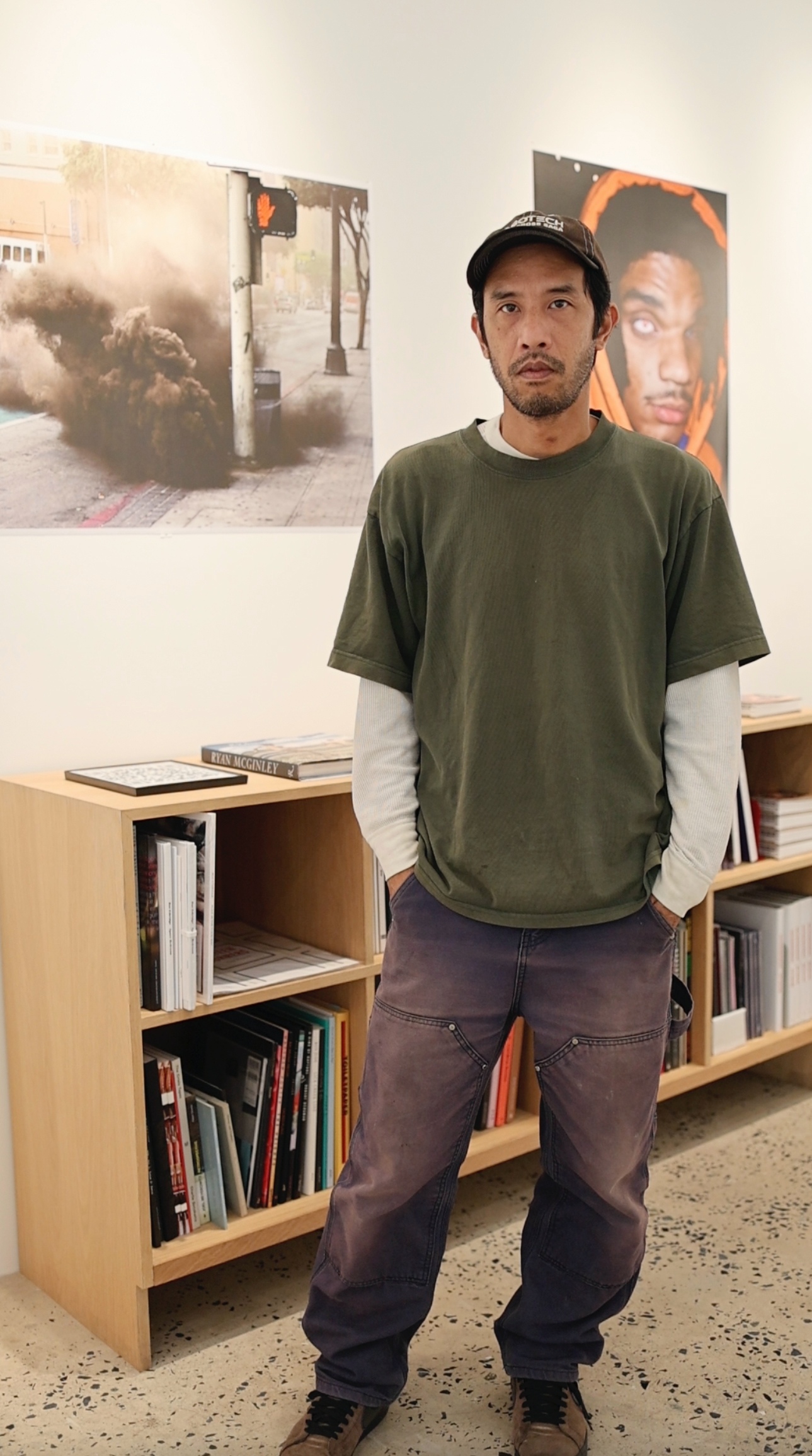
Jerry Hsu: ”How About Never”
Interview conducted on the occasion of Jerry Hsu’s exhibition at Rectangle Room.
Rectangle Room
Jerry Hsu — How About Never
September 10–October 3, 2026
Rectangle Room at Primary Photographic
113 Eldridge St, New York, NY 10002
Interview by James Maher
Can you start by giving us the general details of your new book? Just a frame of it.
Yeah, so the book is photographs that I made while living in Los Angeles. I moved there in 2011, and it runs to the present, so it's about a 15- or 16-year span of time. All the photos were taken in Los Angeles. And it's just a record of my emotional reality while living there.
In the early days, did you know you wanted to turn this into a book? Did you envision yourself transitioning to a photographer from pro skateboarding?
Yeah, I always had that. I always imagined myself being a photographer. Being a skateboarder did not ever stop me from making photographs. I always intended for this project to exist.
I try not to think too much about whether something will be in a book, or books in general. I don't really work like that. I kinda just—I photograph patterns that I like, and then while I look through the archive, a narrative will appear to me. Sometimes it works and sometimes it doesn't. I try not to think about things. I try not to shoot in too much of a themed way. I really just trust the patterns that I see.
Do you mind telling me about the title, How About Never? It can mean something very different, whether you're saying it to someone or someone's saying it to you. How did the title come about?
It's strange, 'cause I've had the title for years and years, and I don't really know where it came from. It was just something I heard, and I thought it was funny. I do like that it's a little tongue in cheek, and I do like that I'm not saying it. I feel like it's being said to me. Maybe everything is saying that to me all the time. I like that it's a little bit funny, but it also denotes a bit of rejection, which is something that I'm constantly dealing with on small and large levels.
You've said that near the end of the bookmaking process, when you were editing, you realized the project was not just about you and your time living in LA after moving from the Bay Area, but also about your relationship with your ex-wife. Do you mind talking a bit about that? Was it a sudden epiphany? Do you think that, subconsciously, the wheels had been turning in the back of your head?
Yeah, towards the end of the edit—the book had pretty much been completed—and I just... It was an epiphany where I started to realize that my emotional state and emotional journey in my relationship coincided with not only the making of the photographs, but the editing process. Because as I was editing the book, we were separating, so I think it just naturally got in there. I didn't really do it on purpose.
I think one of the main themes in the book is transformation. There's a lot of deterioration, accidents, fire, or things like that. There are many opposing forces, fire and water. I realized that I was also transforming at the same time into something else, and it was a painful experience. My marriage was—I love my wife still. My marriage was a success, but it did live its life. I think it transformed the both of us. Those images really speak to the pain that you need to experience in order to become something else. A rebirth.
When you say you've transformed, is there an easy way to describe how you were 15 years ago to now?
I think the main thing that I have learned is how to be a little bit more honest with myself and the things that I need. Because I think I generally was either not aware of what I needed, or I simply thought it was better for me to put other things before myself. But in the end, it created a reality that was too painful. I think that's the main difference between who I was and who I am now. Obviously I'm not completely a new person. I've just been able to acknowledge certain things about my life.
I saw in one of the videos, correct me if I'm wrong, that you like masks and collecting masks. Do you feel like within society you had to put on a mask? Sorry, my parents are both psychiatrists, so I like to get into the weeds with this stuff.
That's okay. My girlfriend's a psychiatrist.
I know what video that's from, that's very old. I don't really collect masks. But I think in normal life, in relationships, I think there's a feeling of—I think most people want to, they do not want to cause friction. And the way that they adapt is to try and—they have a facade or a persona that they portray or that they enact, in order to avoid pain. It's most people's motivation, I feel, just to go through life and to try and avoid as much pain as possible. But much of it is necessary. Unfortunately, yeah, wearing a mask for too long is—it inevitably will harm you more than it will help you.
Do you think part of the transformation is that you're better at not putting aside pain, and kind of processing it?
Yeah, it's funny because learning about your behavior that harms you still doesn't really guarantee that you will change at all. Self-awareness is only the beginning of what you need to do in order to grow, or treat yourself better, or understand the world. I don't know. I feel like everything is just a little bit too fresh, and I'm not that much different. I've just been shown a few things.
I connect to that. I think about how I had been pushing down the pain so hard, so much, but now it's easier to bring it to the surface and deal with. And part of that is figuring out exactly where my boundaries are. Growing up, were you okay at school? Did you fit in well?
I think that being the child of immigrants, being non-white, especially from the Asian diaspora, it's this matter of desperately trying to fit in. And not to be dramatic, but there is sort of an internal violence of assimilation, trying to not be singled out, not be othered, even though that's literally impossible to avoid. But yeah, I think in all forms of life, from the beginning to the end, I feel like there is just so much work you have to put in to fit in, if that's what you want.
I made a decision early on to try and reject that so much. At first, I was trying to fit in so badly, and then I think when I found skateboarding, it helped me understand that I did not need to accept any available forms of life that were being presented to me. I could pretty much just do whatever I wanted. And being sponsored and getting money and all that stuff, it only reinforced my sort of autonomy and ability to do that, which I'm very lucky for. But yeah, it was a roller coaster, my search for identity.
The skateboarding culture, LA culture, and New York as well, have always taken in outsiders and people who have wanted to escape something. Do you feel a connection to that?
Yeah, I think when I started, skateboarding was generally, it was a little bit scary. It was not very inviting. It was not easy to make other friends that were skateboarders. I feel like there is a dichotomy there, because on the one hand it is, but on the other hand, it isn't. It's very outwardly intimidating. That's how I felt, anyways. But once you become accepted, it really forged lifelong friendships.
Also everyone had this shared experience where they did not view reality in the same way as everyone else. But we found some kinship within each other that helped us be creative, have courage to travel, and fight a lot of the systems of our families—and systems in general.
It's interesting to see how skateboarding can be a springboard for creative people to enter the arts, such as writers, filmmakers, and photographers. Do you know many people who went into the arts after?
Yeah. I know lots of people that have become painters and writers, musicians, actors, directors. I think it comes from the type of person who's drawn to skateboarding in the first place. Being part of that community encourages and fosters creativity, and the lack of any type of structure or rules is definitely something that's both a good and bad thing. I think that creative people are drawn to wanting to skateboard, and then once they become skateboarders, they become a part of this world where their curiosity is rewarded. I feel that really encourages people to learn and search and explore.
I have a couple questions about LA. You de-centered the project—you didn't want these obvious LA symbols. You also said you have no claim or authority to talk about LA. But at the same time, this outsider perspective is important. Can you explain your perspective of LA to a New Yorker, to someone who doesn't know it from the inside like you do now?
I wouldn't say that I know LA from the inside. I am an outsider, and I simply was curious about how I would interpret my environment. That's all I really thought about. I never thought about showing LA. I intentionally avoided anything that would look like LA, even though that's impossible. I even tried to not include any photos that had palm trees.
The clichés of Los Angeles are something that I wanted to fight against. But in the end, I didn't really need to fight that hard, because the way that I see it, there's no crossover. As a skateboarder, the way that I interpret the environment pushed me into these places that don't seem like LA. 'Cause where we go to skate, sometimes they're in the most outsider-y areas. My routes in LA, I never went to Hollywood Boulevard or Beverly Hills or anything that I thought was indicative of the clichés of Los Angeles. I had no interest in that whatsoever.
In both LA and New York, it's almost like there are two halves. There are the people who come looking for the cliché, and then there are the people coming to survive and do their thing.
I was way more interested in the minutiae of LA, the melancholy of LA, which is something people don't go there to see or even want to look at. I wanted to see if I could make it interesting.
Do you take most of your photographs while you're traveling by skateboard or car or walking, or is it a mix of everything?
I literally never have my skateboard with me when I photograph. It's mostly car and walking. I'll just drive to an area, walk around, get in my car, go to another area. That's the thing about LA—it's so vast, and it's really not even a city. It's just hundreds of regions. And so it was hard. It took a lot of time to do this. I envy the photographers in New York who can just walk outside and there's just so much happening.
What do you think about the car culture and driving around all the time? Are you used to it from where you grew up?
I'm used to it from the way I grew up in Northern California, where you need a car. But LA is a different animal. It really does live and breathe that stereotype of a car city. I don't mind it so much. I actually enjoy it, but it is a bit isolating. In New York you can walk down the street and run into someone you know. That almost never happens in LA.
But I relate to the isolation; photographing is very isolating. I cannot do it with other people. I find it very strange when someone tries to invite me to go shoot photos with them. I'm just like, I can't do that. I cannot have another person around. No offense. It's a very solitary activity to me. It's meditative. It's work, but I also enjoy the solitude. So for me personally, being in a car, being by myself, walking down the street—I think I kinda need it.
You've described yourself as "almost nihilistic," but also "obsessed with hope." Do you feel more bleak or hopeful, or do you go back and forth?
I go back and forth. The almost nihilistic thing is funny because that was just a joke I made, and it turned into this pull quote. Taken out of context, it made me seem so nihilistic, which I completely am not. I'm actually so hopeful. Just the amount of failure that I have to tolerate making these types of photographs—I can only be hopeful. Being hopeful is the only reason that I can get out of the house and actually attempt to do this kind of stuff, because I can go five, six, seven days in a row and get nothing, which is pretty disheartening. I always say that I'm a little bit eternally hopeful. Despite what feelings you might get from the images, I'm very optimistic.
Do you find yourself daydreaming a lot? Do you get lost in your thoughts?
Yeah, I daydream constantly. I run a business, and the amount of executive functioning that I lack because I just daydream all the time is so frustrating to everyone around me. It's kinda crazy. I would never change that about me. I love being a daydreamer, but it does come at a great cost.
A lot of the stuff that I photograph is just stuff that I happen to come across. But there are other aspects of my photography that I haven't really shown that much, where it is very intentional and staged. There's a lot of portraiture that I do. There's a lot of things that I'm curious about and think about all the time. And I go out and make it, but I just have never shown it. Almost all of the work in this book is just really just found.
Do you want to do more with your portraiture and other work in the future?
I think it's just a nice way to round out my practice, because I work on many different things at the same time, many different series. The portraiture is a helpful way for me to connect with people, because I do sometimes have trouble with the human connection aspect of life. Even though I have lots of friends, sometimes I'm just a little bit isolated, maybe intentionally invisible. So forcing myself to meet new people and make portraits of them is something that I'm trying to do to—I'm not trying to overcorrect, but I'm trying to connect with people, and the camera really does help me do that.
That's interesting. I connect to that a lot. Many artists, when they feel that disconnection in certain ways, they use their art to fill that hole. And, as you say, grow and transform.
I think sometimes you have needs, and sometimes you don't even know you have them, but you can use your art to help fulfill them.
I also connect when you talk about executive functioning. I have the same thing, and everyone's always like, "What are you doing? What are you working on?" Growing up in this neuro-normative world, I constantly felt shame when people would tell me to stop daydreaming, to pay attention. "Why are you doing this?" "Why are you doing that?" And then the million things in my head. But then over time, and I get this sense from you, you realize that you've actually created a shitload of stuff. Does it feel like that? Do you look back and think, "Actually, I've done all this amazing stuff?”
Yeah, I guess I just can't have it all, because I do appreciate what being so daydreamy has afforded me. It's given me so much. But it's just funny, because having low executive function, you can be so punished for it. You know what I mean? Like, you lose money. You don't pay your taxes on time. You're just like, "Fuck, damn, I didn't... Like, now I owe the IRS a shit ton of money because I just wasn't thinking. I just pushed all this stuff away from me." Because the other side of my brain is so active, I wouldn't really change the way that I am, but it is annoying. It's so annoying to have your head in the clouds so much. But whatever, it's okay. That's all I got.
How do you feel about finishing a book that's been such a big part of your life for so long? Like, on one hand it's climactic, and on the other hand it can be anticlimactic. Do you feel like you're at an inflection point? Or are you just kinda going with the flow, taking it a step at a time?
I would describe it as an inflection point, just because the project is so large to me, and it's so meaningful to me that I do feel like I've come out of it on the other side. Mainly I feel relief—It's a relief that this project is out of my life, and that I'm actually proud of it, because it's very difficult for me to feel a sense of pride.
So having done this, I do feel that way. And I think I've just gotten to the age where I've finally accepted the fact that I need to appreciate this in real time, as opposed to trying to look back and be like, "Oh, you did an okay job," or whatever. That's something that being in therapy for so many years has taught me: you need to appreciate your accomplishments in real time, because it's not gonna help you if you try to do it 10, 15 years down the line.
Can you tell us a little bit about what your Sci-Fi Fantasy brand is? I saw you describe the name as coming from the idea of an "AI trying to make friends online." How did the brand come about, and what is it?
I had retired as a pro skateboarder in about 2017 or '18. I was just feeling depressed, so I thought maybe I would change my life a little bit. Sci-Fi Fantasy started as an art project. I was actually depressed, and my wife, she told me to just write down some ideas. "Just write some names down. I think you'll... It's a nice exercise for you. You're good at it." And so I wrote down a bunch of names, and I don't even know what for. What was I gonna do with these names? I have no idea. But Sci-Fi Fantasy was something that jumped out at me, because it's something that is so ubiquitous, but it had never been put on a hat. I like that it sounded good. It was something that everyone could relate to immediately. And then I was like, "Okay, maybe I'll just make a hat out of it." And then it just blew up after that, and I just started making more stuff and making more stuff, and eventually it just snowballed into a skateboard brand.
It took a long time to understand what its aesthetic was. It took a year or two of making stuff. But it's funny, because in the beginning I really drew from corporate graphic design, and that actually came from my parents since I grew up in Silicon Valley. They were both computer engineers, so I spent a lot of time around cubicle culture, computer conventions, and electronics stores. Those aesthetics became a pillar of Sci-Fi's aesthetics.
It's interesting how things come full circle.
Yeah, sometimes. It is very funny, because in the beginning I thought it was gonna be more like '80s sci-fi horror, VHS-type art. And then when I started doing that, I was like, "This is totally not it." Also, in the space of skateboarding, it's like, where can you fit in and do something different? I thought about that too. I was like, "Okay, what does not exist? And what space can I fill?" And eventually what I landed on, I'm happy with. But yeah, I don't really know how to describe Sci-Fi. It's really just aesthetics that I like, that I appropriate in a way that I feel stands out within the aesthetics of skateboarding.
It's also fun to take everything that I've learned in my career and put it into a skateboard brand. But I will say, due to the low executive functioning, it is extremely difficult, and I often fantasize about total escape. It's very rewarding and I love doing it, but yeah, it's weird. I never thought I would be running a skateboard brand—but here I am.
You were represented by skateboard brands your whole life, and now you run your own. My final question, for the photo crowd—you talk about Ed Templeton giving you advice. Do you know him well? Can you talk about how he helped you with the book?
I've known Ed for a long time through the skateboard community. We actually shared a shoe sponsor, so I had the opportunity to spend time with him, and I had always looked up to him as an artist, not just a skateboarder. He was one of the few pro skaters who was actually showing his art, and it seemed like he really was putting his life into it. That was very inspirational to me, because it gave me permission to do the same thing.
With a very early draft of this book, I brought him a folder of photographs that I thought would work. He was very supportive, but he also told me that it looks like you're just trying to show your best photographs—like, you need to be much more intentional about what you're doing. This was like 15 years ago. And since then, I've made a few more books. I've worked with editors. I've collaborated more with other artists.
So gradually, I always took what he said to heart, in terms of what it means to be an editor. Because editing is arguably more important than making the photographs to me. I think I'm glad I waited 15 years. I'm glad that he said that, because editing is very difficult, and storytelling is very difficult. I never forgot what he said, 'cause he was like, "I don't really want to critique your work, but I will say, this does look just like a bunch of your favorite photographs. And that is not something that will be interesting in book form.”
ジェリー・スー:『How About Never』インタビュー
Rectangle Roomでの個展の開催と写真集の刊行に際し、ジェリー・スーに話を聞きました。
ジェリー・スー『How About Never』
会期:2026年9月10日〜10月3日
会場:Rectangle Room at Primary Photographic
113 Eldridge St, New York, NY 10002
まず、新しい写真集の概要を教えていただけますか。どんな本なのか、全体像を聞かせてください。
ロサンゼルスに暮らしながら撮った写真をまとめた本です。2011年に移り住んでから現在まで、15年か16年ほどにわたる写真で、すべてロサンゼルスで撮影しました。そこで暮らすなかでの、僕自身の感情の記録です。
子どもの頃から、いつか写真集を作りたいと思っていましたか? プロのスケートボーダーから写真家へと転身する自分の姿を思い描いていましたか?
はい。自分が写真家になる姿は、ずっと思い描いていました。スケートボーダーであることが、写真を撮る妨げになったことはありません。このプロジェクトを形にしたいという思いも、最初からありました。
ただ、撮るときに「これは本に入るだろうか」とか、本のこと全般をあまり考えないようにしています。僕の制作の仕方は、そういうものではないんです。惹かれるパターンを見つけて写真を撮り、あとからアーカイブを見返していると、そこにひとつの物語が浮かび上がってくる。うまくいくときもあれば、そうでないときもあります。考えすぎず、テーマを決めすぎずに撮るようにしています。自分の目に見えているパターンを信じているんです。
『How About Never』というタイトルについて聞かせてください。自分が誰かに言うのか、誰かから言われるのかで、意味が大きく変わる言葉ですよね。このタイトルはどこから生まれたのでしょうか。
不思議なんですが、このタイトルはもう何年も前から頭の中にあって、どこから来たのか自分でもよく分からないんです。どこかで耳にして、おかしいなと思ったんでしょうね。少し皮肉っぽいところが気に入っています。それに、この言葉を言っているのは僕ではなく、僕に向けて言われているように感じるんです。もしかすると、あらゆるものがいつも僕にそう言っているのかもしれません。少し可笑しいけれど、同時に拒絶の響きもある。拒絶は、日常の小さなことから人生の大きなことまで、僕がずっと向き合っているものです。
以前、編集が終わりに近づいた頃、この本はベイエリアからロサンゼルスに移り住んだあなた自身についてだけでなく、元妻との関係についての本でもあると気づいた、とおっしゃっていました。そのことを少しお話しいただけますか。突然の気づきだったのでしょうか。それとも、無意識のうちにずっと考えていたことだったと思いますか。
そうですね。編集も終盤で、本はほとんど完成していました。そのとき、ふと気づいたんです。僕の感情のあり方や、関係のなかでたどってきた心の道のりが、写真を撮る過程だけでなく、本を編集する過程とも重なっていたことに。編集していた頃、僕たちは別れに向かっていました。だから、その経験が自然と本に入り込んだのだと思います。意図してそうしたわけではありません。
この本の大きなテーマのひとつは、変化だと思います。朽ちていくものや事故、火などがたくさん出てきます。火と水のように、対立する力もあります。そして僕自身も、その頃、別の何かへと変わろうとしていたのだと気づきました。それは苦しい経験でした。僕は今も彼女を愛しています。僕たちの結婚は実りあるものでしたが、ひとつの役目を終えたのだと思います。その経験は、僕たち二人を変えました。あの写真には、別の自分になるために経験しなければならない痛みが表れていると思います。再生ですね。
ご自身が変わったとおっしゃいましたが、15年前の自分と今の自分の違いを、簡単に言葉にするとしたら何でしょうか。
いちばん大きいのは、自分自身にも、自分が必要としているものにも、少し正直になれるようになったことだと思います。以前は、自分に何が必要なのか分かっていなかったか、あるいは自分のことよりほかのことを優先したほうがいいと思っていたのでしょう。でも、その結果、あまりにも苦しい現実をつくってしまいました。昔の自分と今の自分のいちばん大きな違いは、そこだと思います。もちろん、まったく別の人間になったわけではありません。ただ、自分が本当は何を感じ、何を必要としているのかを、認められるようになったんです。
以前、動画であなたが仮面好きで、集めていると話していたのを見た気がするのですが、違っていたら教えてください。社会のなかで生きるうえで、自分も仮面をかぶらなければならないと感じたことはありますか。すみません、両親が二人とも精神科医なので、こういうことをつい深く掘り下げたくなるんです。
大丈夫ですよ。僕の恋人も精神科医です。
どの動画のことか分かります。ずいぶん昔のものですね。実際には、仮面を集めているわけではないんです。ただ、日常生活や人との関係では、たいていの人は波風を立てたくないと思っている気がします。そのために周りに合わせようとして、傷つくことを避けるために、表向きの顔や人格をつくって見せたり、演じたりする。できるだけ苦しまずに人生を送りたいというのが、多くの人の行動の動機になっていると思います。でも、その痛みの多くは、経験する必要のあるものなんです。残念ながら、仮面を長くかぶり続けていると、いずれは自分を守ってくれる以上に、自分を傷つけることになりますよね。
ご自身の変化のひとつとして、痛みを脇に追いやるのではなく、それに向き合い、受け止められるようになったということはありますか。
そうですね。ただ、不思議なもので、自分を傷つけている行動に気づいたからといって、変われるとは限らないんです。自分を知ることは、成長するためにも、自分をもっと大切にするためにも、世界を理解するためにも、ほんの出発点にすぎません。どうなんでしょうね。まだ気づいたばかりで、自分のなかでも整理しきれていないんです。僕自身、それほど変わったわけではありません。ただ、いくつかのことに気づかされたというだけなんです。
その感覚はよく分かります。私も、以前は痛みを必死に押し込めていましたが、今はそれを表に出して、向き合うことが少し楽になりました。その一環として、自分がどこまで受け入れられて、どこからは受け入れられないのかを、はっきりさせることも大切だと感じています。子どもの頃、学校生活はどうでしたか。周りにはうまくなじめていましたか。
移民の子どもで、白人ではなく、とりわけアジア系の移民のルーツを持つ人間にとっては、周りになじもうと必死になるところがあると思います。大げさに言いたいわけではありませんが、同化しようとすることには、自分の内側に向けた、ある種の暴力が伴うんです。自分だけが目立たないように、異質な存在として扱われないようにする。でも、それを完全に避けるなんて、実際には不可能なんですよね。人生のどんな場面でも、最初から最後まで、周りになじむことを望むなら、そのためにものすごい労力を注がなければならないと感じます。
僕はかなり早い段階で、無理に周りに合わせようとすることを、できるだけ拒もうと決めました。もともとは、周りになじもうと必死だったんです。でも、スケートボードに出会って、自分の前に用意された生き方を受け入れる必要はないんだと気づきました。
自分のやりたいように生きていいんだ、と。スポンサーがついて、お金をもらえるようになったことも、自分で決めて生きる自由と、それを実現する力をさらに後押ししてくれました。その点では、本当に運がよかったと思います。でも、自分が何者なのかを探す道のりは、浮き沈みの激しいものでした。
スケートボードの文化も、ロサンゼルスやニューヨークの文化も、昔からアウトサイダーや、何かから逃れたいと思っている人たちを受け入れてきました。そうしたところに共感しますか。
そうですね。ただ、僕が始めた頃のスケートボードの世界は、全体的に少し怖いところでした。あまり誰でも歓迎するような雰囲気ではなかったし、スケートボードをしている友達をつくるのも簡単ではありませんでした。つまり相反する面があると思います。確かに人を受け入れるところもあるけれど、そうではないところもある。外から見ると、とても近寄りがたいんです。少なくとも僕はそう感じていました。でも、一度仲間として受け入れられると、一生続くような友情が生まれました。
それに、みんな、周りの人たちと同じようには現実を捉えられないという経験を共有していました。そんな僕たちが、お互いに通じ合えるものを見つけた。それが、何かをつくったり、勇気を出して旅に出たり、それぞれの家庭の決まりや価値観、さらには社会のさまざまな仕組みに抗ったりする支えになったんです。
スケートボードが、創造性のある人たちにとって、執筆や映画制作、写真といった表現の世界に進むきっかけになるのは興味深いですね。その後、そうした道に進んだ人をたくさんご存じですか。
はい。画家や作家、ミュージシャン、俳優、映画監督になった人をたくさん知っています。それは、そもそもどんな人がスケートボードに惹かれるのか、ということに関係していると思います。そのコミュニティにいると、創造性が刺激され、育まれるんです。決まった枠組みやルールがないことには、確かに良い面も悪い面もあります。
創造性のある人がスケートボードに惹かれて、実際に始めると、好奇心を持っていることが報われる世界の一員になる。それが、学んだり、何かを探し求めたり、新しいことを試したりする大きな後押しになるのだと思います。
ロサンゼルスについて、いくつか聞かせてください。この作品では、ロサンゼルスという街そのものを中心に据えず、いかにもロサンゼルスらしい象徴を避けていますよね。また、ご自身にはロサンゼルスを語る資格や権威はないともおっしゃっています。でも、その外からの視点も大切だと思います。ニューヨークに住む私のように、今のあなたほど街の内側を知らない人に向けて、あなたから見たロサンゼルスについて説明していただけますか。
僕自身、ロサンゼルスを内側から知っているとは思っていません。僕はあくまでよそ者で、自分を取り巻く環境を、自分がどう捉えるのかに興味があっただけなんです。考えていたのは、本当にそれだけでした。ロサンゼルスを見せようと思ったことはありません。ロサンゼルスらしく見えるものは、意識して避けていました。完全に避けるのは無理なんですけどね。ヤシの木が写っている写真さえ、入れないようにしていました。
ロサンゼルスのありきたりなイメージには、抗いたいと思っていました。でも結局、それほど頑張る必要はありませんでした。僕が見ているものは、そうしたイメージとは重ならなかったからです。スケートボーダーとして周りの環境を捉える、その見方によって、ロサンゼルスらしく見えない場所へ自然と向かっていたんです。滑りに行く場所は、ときには街のなかでも、特に人の目が向かないようなところにありますから。
僕がロサンゼルスで普段通る場所には、ハリウッド・ブールバードやビバリーヒルズなど、いかにもロサンゼルスというイメージを象徴するような場所は入っていませんでした。そういうところには、まったく興味がなかったんです。
ロサンゼルスもニューヨークも、まるで二つに分かれているように感じます。世間でおなじみの街のイメージを求めてやって来る人たちと、そこで生きて、自分のやりたいことをするためにやって来る人たちがいる。
僕がずっと惹かれていたのは、ロサンゼルスの日常のささやかな細部や、この街が持つもの悲しさでした。人々がわざわざ見に来るわけでも、目を向けたいと思うわけでもないものです。そうしたものを、興味を引く写真にできるか試してみたかったんです。
写真を撮るのは、スケートボードや車で移動しているとき、あるいは歩いているときが多いのでしょうか。それとも、そのすべてですか。
撮影するときは、スケートボードは本当に一切持っていきません。ほとんど車と徒歩です。ある地域まで車で行って、歩き回って、また車に乗って別の地域へ行く。ロサンゼルスは、とにかく広いんです。ひとつの都市というより、何百もの地域が集まっているような場所です。だから大変でした。この作品をつくるには、ずいぶん時間がかかりました。外に出ればいろんなことが起きているニューヨークの写真家が、うらやましいですね。
車社会や、いつも車で移動する生活については、どう感じていますか。育った場所でもそうだったので、慣れているのでしょうか。
育った北カリフォルニアでも車は必要だったので、慣れています。でも、ロサンゼルスは別格です。「車の街」というイメージそのままに、街全体が車を中心に動いている。僕はそれほど苦にはなりません。むしろ楽しんでいます。ただ、少し孤立しやすいですね。ニューヨークなら、通りを歩いていて知り合いにばったり会うことがありますが、ロサンゼルスでは、まずありません。
でも、その孤独感は僕にはしっくりきます。写真を撮ることも、とても孤独な行為ですから。僕は誰かと一緒には撮れないんです。一緒に写真を撮りに行こうと誘われると、とても不思議な感じがします。「僕にはできないな」と思ってしまう。ほかの人がそばにいると駄目なんです。その人が嫌だということではなくて。僕にとって撮影は、一人でするものなんです。瞑想のようでもあります。撮影は大変だけれど、一人で過ごす時間も楽しんでいるんです。だから、車に乗って、一人になって、通りを歩く。僕には、そういう時間が必要なんだと思います。
ご自身を「ほとんどニヒリストのようだ」と表現する一方で、「希望に取りつかれている」ともおっしゃっています。悲観的な気持ちと希望のある気持ちでは、どちらが強いのでしょうか。それとも、その間を行き来していますか。
行き来しています。ただ、「ほとんどニヒリスト」というのは、おかしな話で、ただの冗談だったのに、記事のなかで大きく抜き出して引用されてしまったんです。文脈から切り離されたことで、僕がひどく虚無的な人間みたいになってしまった。でも、まったくそんなことはありません。実際には、すごく希望を持っているんです。
こういう写真を撮るには、本当に何度も、うまくいかないことに耐えなければなりません。だから、希望を持つしかないんです。家を出て、こうした撮影をやってみようと思えるのは、希望があるからこそです。5日、6日、7日と続けて撮りに出ても、何も得られないことがありますから。それは、かなり気落ちします。僕はいつも、自分はいつまでも希望を持ち続けるところがある、と言っています。写真からどんな印象を受けるとしても、僕自身はとても楽観的なんです。
よく空想にふけるほうですか。考え事に没頭して、周りが見えなくなることはありますか。
はい。いつも空想しています。僕は事業を経営しているんですが、空想ばかりしていて、物事を段取りよく進めたり、やるべきことを実行したりする力が足りなくて、周りのみんなをすごく苛立たせています。自分でも、ちょっとどうかと思うくらいです。でも、そんな自分を変えたいとは思いません。空想にふけるのが好きなんです。ただ、その代償は大きいですね。
僕が撮るものの多くは、たまたま出会ったものです。でも、まだあまり発表していない写真には、明確な意図を持って、演出して撮ったものもあります。ポートレートもたくさん撮っています。興味を持って、いつも考えていることはいろいろあるんです。そして、実際にそれを撮りに行く。ただ、まだ発表していないだけです。この本に収めた作品は、ほとんどすべて、偶然見つけたものを撮った写真です。
今後は、ポートレートやほかの作品にも、もっと取り組んでいきたいと思っていますか。
自分の制作に幅を持たせる、いい方法だと思っています。僕はいつも、いろいろな作品やシリーズを同時に進めていますから。ポートレートは、人とつながる助けにもなっています。僕は、人との関係を築くことが、ときどき苦手なんです。友達はたくさんいるけれど、少し孤立してしまうことがある。もしかすると、自分から人目につかないようにしているのかもしれません。
だから、意識して新しい人に会い、その人のポートレートを撮るようにしています。無理に自分を変えようというわけではなく、人とつながろうとしているんです。カメラは、本当にその助けになってくれます。
興味深いですね。とても共感します。多くのアーティストは、何かとのつながりが失われていると感じたとき、その空白を自分の表現で埋めようとしますよね。そして、おっしゃるように、成長し、変わっていく。
自分に必要なものがあっても、その必要性にすら気づいていないことがあると思います。でも、表現することが、それを満たす助けになるんです。
物事を段取りよく進めたり、実行したりする力についてのお話にも共感します。私も同じで、周りからいつも「何してるの?」「何に取り組んでるの?」と聞かれます。いわゆる「普通」の脳の働き方を基準にした社会で育つなかで、「空想ばかりしていないで」「ちゃんと集中して」と言われるたびに、自分を恥じていました。「どうしてこんなことをするの?」「どうしてあんなことをするの?」と言われる一方で、頭の中には無数の考えがある。でも、時間がたつと、実はものすごい量のものをつくってきたことに気づくんですよね。あなたのお話からも、そういう感じがします。ご自身でもそう感じますか。振り返って、「実は、こんなにすごいことをやってきたんだ」と思うことはありますか。
そうですね。何もかも手に入れることはできないんでしょうね。空想ばかりしていることで得られたものには、感謝しています。本当にたくさんのものをもたらしてくれましたから。
ただ、おかしなもので、物事を段取りよく進めるのが苦手だと、ひどいしっぺ返しを食らうこともあるんです。分かりますか。お金を損したり、税金の支払いが期限に間に合わなかったり。「くそ、しまった……。何も考えずに全部後回しにしていたせいで、IRS(米国の内国歳入庁)に、とんでもない額を払わなきゃいけなくなった」とかね。
でも、頭の別の部分はすごく活発に動いているので、自分のあり方を変えたいとは思いません。ただ、困ることはあります。これほどいつも上の空でいると、本当にうんざりすることもある。でも、まあ、いいんです。僕にはこれしかないですから。
長い間、人生の大きな部分を占めてきた本を完成させて、どんな気持ちですか。大きな達成感がある一方で、拍子抜けするところもあるかもしれません。今、転機を迎えていると感じますか。それとも、流れに身を任せて、一歩ずつ進んでいる感じでしょうか。
転機だと思います。このプロジェクトは僕にとって、とても大きく、意味のあるものだったので、それをくぐり抜けて、向こう側に出たような感覚があります。
いちばん強いのは、安堵ですね。このプロジェクトが自分の手を離れたこと、そして、完成したものを心から誇りに思えていることに、ほっとしています。僕にとって、自分のやったことを誇りに思うのは、とても難しいことなんです。
でも、今回はやり遂げたことで、そう感じられています。それに、ようやくこの年齢になって、あとから振り返って「まあ、よくやったじゃないか」と思うのではなく、今この瞬間に、自分の成し遂げたことを認めて、喜ぶ必要があると受け入れられるようになった気がします。
それは、長年セラピーを受けて学んだことでもあります。自分が成し遂げたことは、そのときにきちんと認めてあげないといけない。10年、15年たってからそうしようとしても、今の自分の助けにはならないんです。
ご自身のブランド「Sci-Fi Fantasy」について、少し教えていただけますか。名前について、「オンラインで友達をつくろうとするAI」というイメージから来ていると説明されているのを見ました。どのように始まった、どんなブランドなのでしょうか。
2017年か18年頃に、プロのスケートボーダーを引退したんです。気持ちが落ち込んでいたので、少し生活を変えてみようと思いました。Sci-Fi Fantasyは、アートプロジェクトとして始まりました。
当時、本当に落ち込んでいて、妻が、何かアイデアを書き出してみたらと言ってくれたんです。「とりあえず名前をいくつか書いてみたら。いい気分転換になると思うよ。そういうの、得意でしょ」と。それで、名前をたくさん書き出しました。何のためだったのか、自分でも分かりません。その名前を使って何をするつもりだったのか、まったく考えていませんでした。
でも、そのなかでSci-Fi Fantasyという名前が目に留まったんです。どこにでもある言葉なのに、キャップに使われているのは見たことがなかった。響きも気に入りました。誰でもすぐになじみを感じられる言葉ですしね。それで、「じゃあ、とりあえずこの名前を入れたキャップをつくってみようかな」と思ったんです。そうしたら一気に人気が出て、次々といろいろなものをつくるようになり、やがて雪だるま式にスケートボードのブランドへと育っていきました。
ブランドの美的な方向性が見えてくるまでには、時間がかかりました。1、2年は、ものをつくり続けていましたね。でも面白いことに、初めの頃に強く影響を受けていたのは、企業のグラフィックデザインだったんです。それは実は、両親から来ていました。僕はシリコンバレーで育ち、両親は二人ともコンピューターエンジニアでした。だから、パーティションで区切られたオフィスや、コンピューターの展示会、電気製品の店などに触れる機会が多かった。そのデザインや雰囲気が、Sci-Fiの美意識を支える柱のひとつになりました。
巡り巡って、自分の原点に戻ってくるのは面白いですね。
そうですね。そういうこともあります。本当に面白いのは、最初は80年代のSFホラー映画や、VHSのパッケージのようなビジュアルになると思っていたことです。でも、実際にやり始めると、「これは全然違うな」と思いました。
それに、スケートボードの世界のなかで、自分はどこに位置して、どんな違うことができるのかも考えました。「まだ存在していないものは何だろう。自分が入り込める余地はどこにあるんだろう」と。最終的にたどり着いたものには、満足しています。
でも、Sci-Fiをどう説明すればいいのかは、よく分かりません。自分が好きなデザインやイメージを取り入れながら、スケートボードの世界のなかで独自の存在感を持つように使っている、としか言えないですね。
これまでのキャリアで学んだことを、スケートボードのブランドに注ぎ込めるのも楽しいです。ただ、物事を段取りよく進めたり、実行したりするのが苦手なので、経営はものすごく大変です。何もかも放り出して逃げてしまいたいと、よく空想しています。とてもやりがいがあって、好きでやっているんですけどね。不思議なものです。自分がスケートボードのブランドを経営するなんて、思ってもいませんでした。でも、今こうしてやっているんです。
これまでずっとスケートボードのブランドに所属する側だったあなたが、今では自分のブランドを経営しているんですね。最後に、写真に関心のある読者に向けて質問です。エド・テンプルトンから助言を受けたと話されていますが、彼とは親しいのでしょうか。この本をつくるうえで、どのような助けになったのか教えてください。
エドとは、スケートボードのコミュニティを通じて、長い付き合いがあります。シューズのスポンサーが同じだったので、一緒に過ごす機会がありました。僕はずっと、彼をスケートボーダーとしてだけでなく、アーティストとしても尊敬していました。自分のアート作品を発表している数少ないプロスケーターの一人で、本当に人生を懸けて取り組んでいるように見えたんです。その姿には、とても刺激を受けました。自分も同じことをしていいんだ、と思わせてくれたからです。
この本のごく初期の段階で、使えそうだと思う写真をフォルダーにまとめて、彼のところへ持っていきました。とても親身になってくれましたが、同時に、「自分のいちばんいい写真を見せようとしているだけに見える。何をしようとしているのか、もっとはっきりした意図を持つ必要がある」と言われたんです。15年ほど前のことです。それから、僕はさらに何冊か本をつくり、編集者と仕事をし、ほかのアーティストと共同制作する機会も増えました。
そうした経験を重ねながら、編集するとはどういうことなのかを考えるうえで、彼の言葉をずっと心に留めてきました。僕にとって編集は、写真を撮ること以上に大切だと言ってもいいかもしれません。
15年間待ってよかったと思います。あのとき、彼がそう言ってくれてよかった。編集することも、物語を伝えることも、とても難しいですから。彼の言葉は、一度も忘れたことがありません。「君の作品にあれこれ批評をしたいわけじゃない。でも、これは自分のお気に入りの写真を集めただけに見える。それだけでは、本にしても面白いものにはならない」と言われたんです。