“Janette Beckman: Capturing the Spirit of the Streets”
Exhibition: Rebels + Icons: The Photography of Janette Beckman
Venue: MOPOP, Museum of Pop Culture, 325 5th Avenue N, Seattle, WA 98109
Dates: May 15, 2026 to September 8, 2027
Interview by: James Maher
Japanese translation by: Miwa Susuda
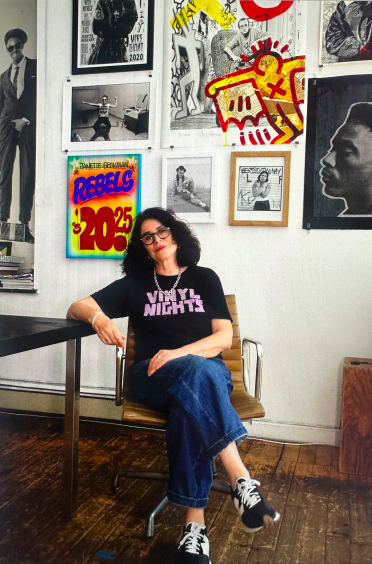
Hi, I’m Janette, welcome to my studio. I'm having a big retrospective, 40-plus years of my photography at the Museum of Pop Culture. And it's kind of crazy and intimidating, because it's my whole life basically. The show is in Seattle and opens May 15th.
It's a huge show. It's like 6,000 square feet, which I can't quite get my head around. There are different sections, so there's music and youth culture, which is punk, hip hop, and anything else that kind of comes in that category. It's not just the bands, it's the fans because I always documented the fans. I was always super interested in street style and what people were wearing. Then there's a section on fashion and style. I did campaigns for brands like Levi's and Dior, and there’s a street section. I've been doing street portraits pretty much all my life. There's a celebrity section and there's also a section called Say It Out Loud, which is about activism. I've been documenting protests since 1981, from Rock Against Racism to present day No Kings. There's probably 150 framed, exhibited pictures, but there are also these interactive screens where people can scroll through. I think there's more like 700 pictures if you include all pictures on the screens, which is wild.
Last year, they sent three curators to my house and we were sitting right here at this table for a week. I put up hundreds of photos, contact sheets, and I printed out little prints. Lots and lots of images in different sections.
It covered a whole wall, and we just sat there and edited them together. It was a great process. These people were really lovely. It was the chief curator, museum designer and the producer, and they were really strict. I mean, the one thing about working with the museum, they're not playing.
So they were here on the dot of nine, until five, and then we'd go out for dinner and it was a great process. Since then, they have all these teams. Museums have teams come to find out: this is the team for the day after, this is the team who's going to tell you what you're doing on the day, this is the team for the merchandising. I'm working with all these teams; it’s a lot of Zoom calls. The show opens May 15th. It's not just pictures on the wall. It's a lot of wheatpasting, big life-sized wall wheatpastes. A lot of graphics. They're trying to build streets so people can walk down the street and see a picture of, say, Boy George at the end of the street.
We are also making a little mini doc, like a 15-minute documentary. Me and my friend Joe did it, who used to work with Bruce Weber a long time ago, he shot it and co-directed it with me. We've interviewed a bunch of people from back in the day. We’re getting Mix Master Mike, the DJ from the Beastie Boys to do the soundtrack. Cafe Royal made these five little zines; we’re making a little box set with a signed print.
I’ve published a lot of books. The first book was in 1991, it was called Rap Portraits and Lyrics of a Generation of Black Rockers. I did it with Bill Adler, who was then director of publicity at Def Jam. So he did the writing. I had portraits of, you know, everybody, LL Cool J, Run DMC, Salt-N-Pepa, you name it. So we had a portrait and we had a lyric from a song, and Bill wrote something about each artist. We were a little ahead of our time and we couldn't get any of the big block stores to buy the book because apparently they thought it would be stolen. I did a book on punk called, Made in the UK, with Powerhouse Books in 2005. In 2008, I did a book on hip hop with Powerhouse.
In 2014, I did a project with my friend, Cey Adams, who was a graffiti artist, and the creative director at Def Jam. He had the idea that he would get his friends, the graffiti artists, to draw on my hip hop photos. The project was called The Mashup, and we actually did a little exhibition. He asked 10 of his friends and we had a little exhibition in this very space and 500 people turned up to the opening. It was nuts. So we realized we had something really cool. I'd made these 11 by 14 prints, and so we started taking the exhibition to different locations, different galleries. I took it to London, it was in Paris, it was in Geneva. And in the end, we end up making a book and having a huge show in LA. That book came out I think 2018 and then I made Rebels: from Punk to Dior, which came out during the pandemic. I managed to get these great quotes from people like Salt, from Salt-N-Pepa. The newest book is definitely the most complete of my work.
I grew up in in the suburbs of London and I always wanted to be an artist. I went to arts school. I was always drawing in the evening. I went to a lot of museums when I was a kid. My parents didn't want me to go to art school because, how are you gonna earn a living? You know, the old story.
But I persisted and I ended up going to art school and I really wanted to be a portrait painter. But in the end, I transitioned to photography. I went to photo school for three years and punk was just sort of starting to happen. One day, I walked into a music magazine called Sounds and met this woman, Vivien Goldman, this famous punk writer, and she was like, “Oh, I like your pictures. Why don't you go photograph this band tonight?” I'd never photographed the band before. So I went, I took the pictures. I had a little dark room. I went back to the dark room and I developed them, came back the next day and she's like, “Oh, these are good,” and gave me another job.
I was the second photographer, because the first photographer, this guy Tommy Sheehan, was getting all the big trips, to photograph Led Zeppelin in Texas and all of that. And for me, they were like, “Oh yeah, there's a new band. They're kind of punk, you know. They're called, the Undertones. So I ended up doing all the punk stuff and I really loved it. During that time, in the late seventies, early eighties, there were so many youth cultures going on in the UK. There was punk, there was rockabilly, there was reggae, there were skinheads, there was two-tone. So I ended up documenting all of that, photographing for this weekly newspaper, two or three bands a week. It was a really great time, living in a sort of squat, my rent was $8 a week. And you know, I was just working, doing what I loved, and it was amazing.
And of course, these bands weren't really famous. They were just all up-and-coming. The fall of 1982, for the first ever hip hop show to come to the UK, it was called The New York City Rap Tour. They were like, who wants to photograph this? And I put my hand up.
I didn't know what it was. And that afternoon, the afternoon of the assignment, I went down to this kind of Airbnb behind Victoria Station. And I just met all these people; I didn't know who they were, but I was running around, you know, photographing everybody.
So I got all these pictures, and then at night I went to the show and all these people were on stage together. So it turned out that I had actually photographed Futura, Afrika Bambaataa, Fab Five Freddy, the Rock Steady Crew— the people who were going to be the godfathers and godmothers of hip hop culture.
About a month later, I was coming to New York to visit a friend for Christmas, and I just came here and ended up staying. There's a perennial question about who invented punk. Was it America or was it the UK? I wasn't here, so I don't know. But in my mind, it came from the UK because, you know, Britain was in a terrible state. It was broke, there were no jobs. You know, when Johnny Rotten sang No Future, that was the truth. There was no future. There were no jobs. Margaret Thatcher was in power. They were getting rid of all the social services; it was a dire time in the UK and plus, you know, we've got hundreds of years of the class system bearing down on us and we hated the monarchy, we hated the government.
We didn't have any money. So basically, you know, out of that came invention and music and protests. People weren't buying clothes made by Gucci. We didn't have money. We were dressing from yard sales and Army, Navy stores and so forth.
We had to be inventive. Even though there were all these different youth cultures and you know, the skinheads supposedly didn't like the punks, but they'd still go to the concerts. There was a thing in London, if you were part of the underground and you saw somebody of your age, there was a sort of tacit understanding that okay, you are in it. I'm in it. And you know, I was an art school person, so I was running around in my 'Fuck Art Let's Dance' Madness t-shirt with some pajama bottoms and Converse sneakers. But there was a certain element of respect that went along with that because you know, fuck the class system. In England, it's a certain thing where you stay in your lane, and we didn't want to stay in our lane. We wanted to be who we wanted to be.
And then I came here in ’83, and it was the exact same thing. New York was broke. People didn't have work, and this new group of young people were doing the exact same thing. They were making music; they were dressing with no money. Somebody like Dapper Dan, for instance, up in Harlem… people wanted to wear Gucci, but they couldn't afford it, so he made his own Gucci fabric and made his own clothes. You know, people in hard times, they somehow manage to create.
I was living in what is now Tribeca, but back then it was junkies in the alley. It was cockroaches. It was rats, but I loved it because the loft I was staying in had heat, which I didn't have in England. So that was kind of exciting.
I had this portfolio, I'd done the Police album cover, I shot the Clash, I'd shot Boy George, So I had my portfolio and I was going around to all the big record companies trying to get work. I thought people were going to give me work, but they thought my work was too messy, grubby. Hair wasn't combed. You could see people’s zits. People weren't dressed properly and they were like, “well, we have airbrushing and don't think any of musicians who work with us will want to work with you. Your stuff is too raw and gritty.” So it took a while.
But eventually they were like, well, there's this new group, there's this new thing happening, it's called rap. And there's this new rap group, the Fearless Four, you can go and do their album cover. And soon after that, the British magazines knew I was here, so they started to call me going, “Oh, there's this group Run DMC, can you go photograph them?” We didn't have cell phones, we didn't have computers. It was literally a landline. They gave me this phone number and I call up and I’m talking to Jam Master Jay's mom. Run DMC on the street where they lived, and years later it turns out to be one of my most famous pictures
We didn't have hairdressers, no styling, no art directors. It was just me, my camera, and whoever I was with. When I photographed LL Cool J with the boombox, that was his first ever press picture.. I started working for these little tiny little startup record companies like Def Jam and Sleeping Bag, and they were just sending me all their people because I was easy to work with. I got the job done.
Segueing back to what came first as far as punk, I'm not sure when the Ramones recorded their first song, and it doesn't matter to me. I feel like the direction of British punk and American punk was perhaps fueled by the drugs they were taking, and maybe the drugs here were a little stronger. In England, it was like speed and weed. New York in the 80's, they call it Hip Hop's Golden Age and maybe it was, but you know, I was seriously concentrating on just photographing the hip hop scene. And I worked for the Daily News. I had a double page fashion spread every week with my friend Ellen, who was a stylist, and that was incredible. They also had me photographing Keith Haring and Walter Mosley, all sorts of different types of people. I was working for Nickelodeon. I was working for Sesame Street. I did a lot back then, but the hip hop thing was huge.
I photographed Salt-n-Pepa for some British magazine before they even had a record out.....
I was living on Avenue B at the time, and we just spent an afternoon on a hot summer’s day taking pictures in the neighborhood. There were murals all over the place and they were like, “Oh, I think we're gonna have a record coming out. Would you, could you do our record cover?” I ended up doing record covers for their manager, Hurbie 'Luv Bug' Azor, who managed a lot of artists. I shot a big portrait of him with all his artists for the Daily News Magazine, for a story about him, which I pitched to them. They were always asking me for ideas, so that was cool.
I was working for these small record labels like Sleeping Bag and Def Jam and they pretty much sent me everybody, because I had a little studio on Lafayette Street. You'd go outside and there was graffiti everywhere. So I had wallpaper for my photos. It was pretty great. And then we'd go to the Jones Diner and get a burger. It just was a really nice lifestyle, you know? And then you'd go out at night to clubs, like Area and the Palladium. Because I was living in the East Village, there were all these little art galleries opening, so we’d go to art openings. It was a great time to be in New York. It was so culturally vibrant for me as a Brit, and I'd been so used to this class system and everything. I was totally accepted. A lot of people ask me, what was it like for you as a White woman going to the Bronx to photograph? And honestly, it was amazing. Everybody in the hip hop world was so nice to me. They literally were like, “Where you from? Oh, what's London like?” And we'd start having a conversation and get my portrait. N.W.A. and Public Enemy, all super nice people. Which is interesting, because I was often working for these British magazines that nobody had ever heard of or seen. The Face was expensive. Nobody in the Bronx was going to go and buy the Face. But they were all at the start of their careers and I think they were just happy to have somebody interested in them. And I'd be working with writers, so they'd get interviewed.
We didn't know what it was going to be. That is really the big thing. And it's the same with the whole punk thing. Like when I took that picture of Boy George, the one right behind me. That was the week before his first single went to number one. Nobody knew Boy George. I was friends with him because we came from the same neighborhood. And he's just sitting on the sidewalk outside his record company, head to toe in Vivienne Westwood. I really love that picture, but you know, he wasn't a big superstar. Everybody knew him on the street, but in England, things happen really quickly. It can take a week and suddenly your record is at number one. I felt the same way when I came here. It was a culture that was marinating. I think we were just excited. I mean, we had to have enough money to eat, and pay rent, but it wasn't really about the money. It wasn't like Madonna was hiring me for $20,000. I was not getting those shoots at all. It was only much later that, you know, somebody like Levi's would come along. People were writing songs about their lives. And it was the same with punk.
I was living on Avenue B. I'd come into the studio and swing by Tower Records across the street to see if any of my record covers were in the window. In 1988 when the Tompkins Square Park riots erupted outside my apartment the neighborhood was crazy. I lived on an Avenue B, all that time. I never had anything happen to me. I was walking around with a camera and nobody bothered me. I then had to move out of the apartment I was living in. So me and my boyfriend at the time found this place on Bond Street. It was a crack street. There were a lot of homeless people. There were two parking garages, there was a lumber yard, a plumbing supply. It was an industrial street and I really liked that about it. And, we got this apartment, but it was illegal to live in the building, but we didn't care. Everybody's like, “You're crazy, why are you moving into this illegal building?”
But it was a building full of artists and we just stuck it out. Eventually we got our certificate of occupancy, and it worked perfectly because it's a floor through loft and I have my studio in the front. I live in the back, and it turned out to be the perfect space for us.
Pretty much everything else around here is renovated and everybody comes here and goes, “Oh, it's the last artist loft on the block.” There are a couple over there too, but it's a great little block because it's right in the middle of the East Village and the West Village.
I try to capture people's spirit. It's kind of like my superpower because I'm really not a tech photographer. I mean, obviously I've done big shoots for brands where I've had to rent studios and have assistants, but my superpower is really making people feel at ease and letting them be themselves. And I'm quite chatty, so that seems to work. I was very shy as a kid and somehow having a camera has enabled me to go up to people and talk to them and learn about them.
I teach a street portrait class for the School of Visual Arts for eight weeks, and we go out on the street to a different neighborhood in New York every week. I'm trying to teach people who've maybe never taken a portrait before, how to go up to a complete stranger on the street. They're all ages, 18 to 60. My philosophy is to be polite, be kind, be respectful, and say thank you. That's all you really need. You can go up to somebody on the street and go, “I love your hat,” and they feel special. Then we take a quick portrait. And we make a zine at the end of the class.
It’s documenting what's going on, sort of what I've done all my life out on the street, documenting street style and street culture. I recently had to write an artist statement for my catalog and I wrote something… It's almost like between a breath. You’re talking to them and while they're thinking about a pose, you take that picture. And then they do the pose.
And you check your ego at the door, because obviously the subject—I think, Gordon Park said this—the subject is way more important than the photographer. Some photographers forget that.
I'd like to finish by talking about this project, El Hoyo Maravilla, that I made with Dashwood—it’s something between a book and a zine. We made this in 2011. It's about a project that I did about an East LA gang. In 1983, I spent the summer in LA and I found out about this gang. I spent the summer going back and forth to this very dangerous neighborhood. Everybody told me not to go, but I was really fascinated by them. I'd just go there every day and hang out in the park, and take portraits of people. I could not get this published in 1983; nobody was interested. I had writing, I had everything. And then David at Dashwood in 2011 asked, “Is there a project you have that never got published?” He looked at it, he loved it.
So we published it, and one of the women in one of the pictures got in touch with me and said that 90% of the people in this book were either dead or in jail. And these three friends had stayed in touch and they were still best friends. So I went to LA and met them and we just told stories. They have managed to survive. They still live in the neighborhood. They've got children and grandchildren. They kept their kids out of gangs.
One of them works for the DA's office. One of them works in rehabilitation, keeping people out of gangs, and one works in human resources and drives a Mercedes. They've all done really well and it was just amazing to meet them. And now when I have shows in LA, they come and they bring their grandkids. They're the stars of the show as far as I'm concerned. It was a beautiful project.
ジャネット・ベックマン:ストリートの空気を写す
展覧会:『Rebels + Icons: The Photography of Janette Beckman』
会場:MOPOP(Museum of Pop Culture)
325 5th Avenue N, Seattle, WA 98109
会期:2026年5月15日 ー 2027年9月8日
インタビュー:James Maher
日本語訳:須々田美和
こんにちは、写真家のジャネットです。私のスタジオへようこそ。
今、シアトルのMuseum of Pop Cultureで、私の40年以上にわたる写真の仕事をまとめた大きな回顧展を開催することになっています。自分の人生そのものを見せるようなものなので、ちょっとクレイジーでもあるし、正直とても圧倒されています。展示はシアトルで、5月15日にオープンします。
本当に大きな展示で、約6,000平方フィートあります。自分でもまだ、その規模をうまく想像しきれていません。展示はいくつかのセクションに分かれていて、音楽とユースカルチャーのセクションでは、パンクやヒップホップ、それにそのカテゴリーに入るようなものを扱っています。でも、バンドだけではありません。ファンも含まれています。私はいつもファンも記録してきましたし、ストリートスタイルや、人が何を着ているのかにずっと強い興味がありました。それから、ファッションとスタイルのセクションもあります。Levi’sやDiorのようなブランドのキャンペーンも撮ってきましたし、ストリートのセクションもあります。ストリートポートレートは、ほとんど人生を通してずっと撮り続けてきたものです。セレブリティのセクションもありますし、「Say It Out Loud」という、アクティヴィズムをテーマにしたセクションもあります。1981年のRock Against Racismから、現在のNo Kingsまで、抗議運動もずっと記録してきました。額装されて展示される写真は、おそらく150点ほどあります。でも、それだけではなく、来場者がスクロールして見られるインタラクティブなスクリーンもあります。そのスクリーンに入っている写真まで含めると、全部で700点くらいになると思います。本当にすごい数です。
去年、美術館から3人のキュレーターが私の家に来て、ここ、このテーブルで1週間ずっと一緒に作業しました。私は何百枚もの写真やコンタクトシートを出して、小さなプリントもたくさん作りました。さまざまなセクションごとに、本当にたくさんのイメージを並べていったんです。
壁一面を覆うくらいの量になって、私たちはそこに座って、一緒に編集していきました。とてもいいプロセスでした。彼らは本当に素敵な人たちでした。チーフキュレーター、ミュージアムデザイナー、そしてプロデューサーの3人です。ただ、とても厳しくもありました。美術館と仕事をするというのは、やっぱり本気なんです。
毎朝9時ぴったりに来て、夕方5時まで作業して、そのあと一緒に夕食に行く。そういう毎日でした。本当にいいプロセスでした。それ以降も、いろいろなチームとやり取りしています。美術館には本当にたくさんのチームがあるんです。「オープン翌日のことを担当するチーム」「当日に何をすればいいかを伝えてくれるチーム」「マーチャンダイズのチーム」など、いろいろあります。私はそうしたチームと全部やり取りしていて、Zoomミーティングもかなり多いです。展示は5月15日にオープンします。今回は、ただ写真を壁に掛けるだけではありません。ウィートペースト、つまり壁に大きな紙のイメージを貼るような手法をたくさん使います。等身大の大きな壁貼りのイメージもあります。グラフィックもたくさん入っています。美術館側は、街のような空間を作ろうとしています。来場者がその通りを歩いていくと、たとえば通りの奥にBoy Georgeの写真が見える、というような構成です。
それから、15分くらいの短いドキュメンタリーも作っています。昔Bruce Weberと仕事をしていた友人のジョーと一緒に作りました。彼が撮影し、私と共同で監督しました。当時を知る人たちにもたくさんインタビューしています。サウンドトラックは、Beastie BoysのDJであるMix Master Mikeにお願いしています。Cafe Royalは小さなジンを5冊作ってくれていて、私たちはサイン入りプリント付きの小さなボックスセットも制作しています。
私はこれまでにたくさんの本を出版してきました。最初の本は1991年で、『Rap Portraits and Lyrics of a Generation of Black Rockers』というタイトルでした。当時Def Jamの広報ディレクターだったBill Adlerと一緒に作った本で、彼がテキストを書いてくれました。私はLL Cool J、Run DMC、Salt-N-Pepaなど、本当にたくさんの人たちのポートレートを撮っていました。つまり、ポートレートがあって、そこに曲のリリックがあって、Billがそれぞれのアーティストについて文章を書いたんです。私たちは少し時代が早すぎたんだと思います。大手のチェーン書店はどこも、その本を仕入れてくれませんでした。どうやら、盗まれるのではないかと思われていたみたいです。2005年にはPowerhouse Booksから、パンクについての本『Made in the UK』を出版しました。2008年には、同じくPowerhouseからヒップホップの本も出しました。
2014年には、友人のCey Adamsとプロジェクトを行いました。彼はグラフィティアーティストで、Def Jamのクリエイティブディレクターでもありました。Ceyは、私のヒップホップの写真の上に、彼の友人であるグラフィティアーティストたちにドローイングを描いてもらう、というアイデアを思いつきました。そのプロジェクトは『The Mashup』というタイトルで、実際にこのスタジオで小さな展示も行いました。彼は10人の友人に声をかけてくれて、オープニングには500人もの人が来ました。本当にすごいことになりました。それで私たちは、「これはすごく面白いものができたんだ」と気づいたんです。私は11×14インチのプリントを作っていたので、その展示をいろいろな場所、いろいろなギャラリーへ持っていくようになりました。ロンドンにも持っていきましたし、パリでも展示しました。ジュネーブでも展示しました。そして最終的には、本を作り、ロサンゼルスで大きな展覧会も開催しました。その本は、たしか2018年に出たと思います。そのあと『Rebels: From Punk to Dior』を作りました。これはパンデミック中に出版された本です。Salt-N-PepaのSaltのような人たちから、素晴らしいコメントをもらうこともできました。そして最新の本は、間違いなく、私の仕事の中で最も包括的なものになっています。
私はロンドン郊外で育ち、ずっとアーティストになりたいと思っていました。アートスクールに通い、夜はいつも絵を描いていました。子どもの頃から美術館にもよく行っていました。両親は私がアートスクールに行くことを望んでいませんでした。「それでどうやって生活していくの?」という、よくある話です。
でも私は諦めず、最終的にはアートスクールに進みました。本当はポートレートを描く画家になりたかったんです。でも最終的には写真へと移っていきました。写真学校には3年間通いました。その頃、ちょうどパンクが始まりかけていました。ある日、『Sounds』という音楽雑誌のオフィスに入っていって、Vivien Goldman という有名なパンクライターに会いました。彼女が私の写真を見て、「あら、あなたの写真いいじゃない。今夜このバンドを撮ってみない?」と言ってくれたんです。私はそれまでバンドを撮ったことがありませんでした。でも撮りに行き、写真を撮りました。小さな暗室があったので、そこに戻って現像し、翌日また持って行きました。すると彼女が「これ、いいじゃない」と言って、次の仕事をくれました。
その頃、私はいわばセカンドフォトグラファーのような立場でした。というのも、ファーストフォトグラファーだったTommy Sheehanが、Led Zeppelinをテキサスで撮るような大きな仕事を全部担当していたからです。私のところには、「ああ、新しいバンドがいるよ。ちょっとパンクっぽいんだけど、The Undertonesっていうんだ」みたいな仕事が回ってきました。そうして私はパンク関連の仕事をたくさん撮るようになり、それが本当に楽しかったんです。その時代、1970年代後半から1980年代初めにかけてのイギリスでは、たくさんのユースカルチャーが同時に起こっていました。パンク、ロカビリー、レゲエ、スキンヘッズ、ツートーン。私はそのすべてを記録することになりました。週刊の新聞のために、週に2、3バンドを撮影していました。スクワットのような場所に住んでいて、家賃は週8ドルくらいでした。私はただ働いて、自分の好きなことをやっていました。本当に素晴らしい時代でした。
もちろん、その頃のバンドはまだ有名ではありませんでした。みんな、これから出ていく存在でした。1982年の秋、イギリスに初めてヒップホップのショーがやって来ました。「The New York City Rap Tour」というツアーでした。「誰かこれを撮りたい人いる?」と言われて、私は手を挙げました。
私はそれが何なのか、まったく分かっていませんでした。その日の午後、撮影の当日の午後に、ヴィクトリア駅の裏手にあるAirbnbのような場所へ行きました。そこでたくさんの人たちに会いました。誰が誰なのか分からなかったけれど、とにかく走り回るようにして、みんなを撮っていました。そこでたくさんの写真を撮り、その夜ショーに行くと、その人たちが全員ステージに立っていました。結果的に、私はFutura、Afrika Bambaataa、Fab Five Freddy、Rock Steady Crewといった、のちにヒップホップカルチャーのゴッドファーザーやゴッドマザーになる人たちを撮っていたんです。
その約1ヶ月後、私はクリスマスに友人を訪ねるためにニューヨークに来ました。そして、そのままここに残ることになりました。パンクを誰が発明したのか、アメリカなのかイギリスなのか、という問いはずっとあります。私はその頃アメリカにいなかったので、本当のところは分かりません。でも私の中では、パンクはイギリスから来たものだと思っています。というのも、当時のイギリスは本当にひどい状況だったからです。国は経済的に破綻していて、仕事もありませんでした。Johnny Rottenが「No Future」と歌ったとき、それは本当に真実でした。未来なんてなかったんです。仕事もありませんでした。Margaret Thatcherが政権にいて、社会福祉はどんどん削られていきました。イギリスは本当に厳しい時代でした。それに加えて、何百年も続く階級制度の重さがのしかかっていて、私たちは王室も政府も嫌っていました。
お金はありませんでした。だから基本的には、そこから発明や音楽や抗議が生まれてきたんです。Gucciの服を買う人なんていませんでした。お金がなかったんです。私たちはヤードセールやArmy Navy Storeなどで買った服を着ていました。工夫しなければならなかったんです。たくさんのユースカルチャーがあり、たとえばスキンヘッズはパンクを嫌っていると言われていましたが、それでも彼らはライブに来ていました。ロンドンには、もし自分がアンダーグラウンドの一部で、同じくらいの年齢の誰かを見かけたら、「あなたもその中にいる。私もその中にいる」というような暗黙の了解がありました。私はアートスクールの人間だったので、Madnessの「Fuck Art Let's Dance」のTシャツに、パジャマのようなパンツ、Converseのスニーカーという格好で走り回っていました。でもそこには、ある種のリスペクトがありました。要するに、階級制度なんてくそくらえ、ということです。イギリスでは、自分の立場や階級の中に留まるべきだ、という考えがあります。でも私たちは、そこに留まりたくなかった。自分たちがなりたいものになりたかったんです。
そして1983年にニューヨークに来たとき、まったく同じようなものを感じました。ニューヨークもお金がありませんでした。人々には仕事がなく、新しい若者たちのグループが、まさに同じことをしていました。音楽を作り、お金がない中で服を着こなしていました。たとえばハーレムのDapper Danのような人です。みんなGucciを着たかったけれど、買うお金がなかった。だから彼は自分でGucci風の生地を作って、自分の服を作ったんです。大変な時代でも、人はどうにかして何かを創り出すんですよね。
私は当時、今でいうTribecaに住んでいました。でもその頃は、路地にはドラッグ中毒の人たちがいて、ゴキブリもネズミもいました。それでも私はそこが好きでした。というのも、滞在していたロフトには暖房があったからです。イギリスには暖房がなかったので、それだけでかなり嬉しかったんです。
私はポートフォリオを持っていました。The Policeのアルバムカバーを撮っていたし、The Clashも撮っていたし、Boy Georgeも撮っていました。だからそのポートフォリオを持って、大きなレコード会社を回り、仕事を得ようとしていました。私は、みんなが仕事をくれると思っていました。でも彼らは、私の写真はあまりにも散らかっていて、汚く見えると思ったんです。髪は整えられていないし、ニキビも見えるし、服もきちんとしていない。彼らは「うちにはエアブラシもあるし、うちのミュージシャンたちがあなたと仕事をしたいと思うとは思えない。あなたの写真は生々しすぎるし、ざらざらしすぎている」と言いました。だから、少し時間がかかりました。
でも最終的に、「新しいグループがいる」「新しいものが起こっている」「ラップというものがある」と言われるようになりました。そして「Fearless Fourという新しいラップグループがいるから、彼らのアルバムカバーを撮ってみたら」と言われたんです。
そのすぐあと、イギリスの雑誌が私がニューヨークにいることを知って、電話をかけてくるようになりました。「Run DMCというグループがいるんだけど、撮りに行ってくれない?」という感じです。当時は携帯電話もコンピューターもありませんでした。本当に固定電話だけでした。電話番号を渡されて、そこにかけると、Jam Master Jayのお母さんと話すことになったりしました。それで、Run DMCが住んでいたあたりの通りで写真を撮りました。でも当時、彼らはまだ有名ではありませんでした。
ヘアメイクもいませんでした。スタイリングもありませんでした。アートディレクターもいませんでした。ただ私と、私のカメラと、その場にいる人だけでした。LL Cool Jがラジカセを持っているあの写真を撮ったとき、それは彼にとって初めてのプレス写真でした。私はDef JamやSleeping Bagのような、小さな立ち上がったばかりのレコード会社で仕事を始めました。彼らはどんどん自分たちのアーティストを私に送ってくれました。私は仕事がしやすく、きちんと仕上げたからだと思います。
パンクについて、どちらが先だったのかという話に戻ると、Ramonesが最初の曲をいつ録音したのか、私はよく分かりませんし、それは私にとって重要ではありません。イギリスのパンクとアメリカのパンクの方向性は、もしかするとそれぞれが使っていたドラッグに影響されていたのかもしれません。こちらのドラッグの方が少し強かったのかもしれません。イギリスでは、スピードとマリファナのようなものでした。
80年代のニューヨークは「ヒップポップのゴールデンエラ (ゴールデンエイジ・ヒップホップ)」と呼ばれ、私は、本当に真剣にヒップホップを撮ることに集中していました。同時に、Daily Newsでも仕事をしていました。スタイリストだった友人のEllenと一緒に、毎週見開きのファッションページを担当していました。それは本当に素晴らしかったです。Daily Newsでは、Keith HaringやWalter Mosleyなど、さまざまなタイプの人たちも撮影しました。Nickelodeonの仕事もしていましたし、Sesame Streetの仕事もしていました。当時は本当にたくさんのことをやっていました。でも、ヒップホップの仕事はとても大きな存在でした。
Salt-N-Pepaが突然現れたとき、彼女たちがまだレコードも出していない時期に、あるイギリスの雑誌のために撮影しました。当時私はAvenue Bに住んでいて、夏の暑い日、近所で午後いっぱい一緒に写真を撮りました。あちこちに壁画があって、彼女たちは「レコードが出ることになると思うんだけど、そのカバーも撮ってくれる?」という感じでした。その後、彼女たちのマネージャーだったHurbie 'Luv Bug' Azorのために、たくさんのレコードカバーを撮ることになりました。Daily News Magazineでは、彼についての記事を企画して、そのためにHerbieと彼のアーティスト全員を撮った大きなポートレートも制作しました。私がその企画を持ち込んだんです。Daily Newsはいつも私に「何かアイデアある?」と聞いてくれていたので、それはとても良かったです。
私はそのような小さなレーベルで仕事をしていてSleeping Bag and Def Jamのようにほぼ全てのアーティストを私に送ってくれました。私はLafayette Streetに小さなスタジオを持っていました。外に出ると、どこにでもグラフィティがありました。だから私の写真には、背景として使える壁紙があったんです。それは本当に素晴らしかったです。そして撮影のあとには Jones Dinerへ行ってハンバーガーを食べました。とてもいい生活でした。夜になると、AreaやPalladiumのようなクラブに出かけました。East Villageに住んでいたので、小さなアートギャラリーがたくさんオープンしていて、私たちはオープニングにもよく行きました。ニューヨークにいるには本当に素晴らしい時代でした。イギリス人の私にとって、ニューヨークは文化的にとても活気がありました。私はそれまで階級制度やそういうものに慣れきっていたので、ニューヨークでは完全に受け入れられているように感じました。
よく「白人女性としてブロンクスへ撮影に行くのはどうだった?」と聞かれます。正直に言うと、それは本当に素晴らしい経験でした。ヒップホップの世界の人たちは、みんな本当に親切でした。文字通り、「どこから来たの?」「ロンドンってどんなところ?」と聞いてくれて、そこから会話が始まり、ポートレートを撮ることができました。N.W.A.もPublic Enemyも、みんな本当に親切な人たちでした。それが面白いのは、私はたいてい、誰も聞いたことも見たこともないようなイギリスの雑誌のために仕事をしていたからです。『The Face』は高価な雑誌でした。ブロンクスの人たちがわざわざ『The Face』を買いに行くことはありません。でも彼らはみんなキャリアの最初の段階にいて、誰かが自分たちに関心を持ってくれること自体が嬉しかったのだと思います。そして私はライターと一緒に仕事をしていたので、彼らはインタビューも受けていました。
私たちは、それが何になっていくのか分かっていませんでした。それが本当に大きなことです。パンク全体についても同じでした。たとえば、私の後ろにあるBoy Georgeの写真を撮ったときのことです。あれは彼の最初のシングルが1位になる1週間前でした。誰もBoy Georgeのことを知りませんでした。彼とは同じ地域の出身だったので友人でした。彼はレコード会社の外の歩道に座っていて、頭からつま先までVivienne Westwoodを着ていました。私はあの写真が本当に好きです。でも彼はまだ大スターではありませんでした。街ではみんな彼のことを知っていましたが、イギリスでは物事が本当に速く進みます。1週間で、突然レコードが1位になることもあるんです。ニューヨークに来たときも、同じように感じました。文化がじっくりと熟成しているような感じでした。私たちはただ興奮していたんだと思います。もちろん、食べていくお金や家賃を払うお金は必要でした。でも、それは本当にお金のためではありませんでした。Madonnaが私に2万ドル($20,000)を払って撮影を依頼するようなことはありませんでした。そういう撮影はまったく来ていませんでした。Levi’sのようなクライアントが来るのは、ずっと後になってからです。人々は自分たちの人生について歌を書いていました。それはパンクも同じでした。
私はAvenue Bに住んでいました。スタジオに行く途中でTower Recordsに寄って、自分が撮ったレコードがウィンドウに出ていないかを見るのが楽しみでした。自分の撮ったカバーがあると、とても興奮しました。1988年、Tompkins Squareの暴動が自宅の真前でありました。近所は本当にクレイジーでした。私はその間ずっとAvenue Bに住んでいましたが、自分には何も起きませんでした。カメラを持って歩いていても、誰も私に危害を加えませんでした。その後、住んでいたアパートを出なければならなくなりました。それで、当時のボーイフレンドと私はBond Streetにある場所を見つけました。そこはクラックの通りでした。ホームレスの人たちがたくさんいました。駐車場が2つあり、材木置き場があり、配管用品の店がありました。工業的な通りで、私はそこがとても好きでした。私たちはそのアパートを手に入れましたが、その建物に住むことは違法でした。でも私たちは気にしませんでした。みんなに「あなたたち、クレイジーよ。どうしてそんな違法な建物に引っ越すの?」と言われました。
でもそこはアーティストばかりが住む建物で、私たちはそこに踏みとどまりました。最終的には居住証明、Certificate of Occupancyを取得することができました。そして結果的に、それは完璧な場所になりました。フロアスルーのロフトで、前に私のスタジオがあり、奥に住むスペースがあります。私たちにとって完璧な空間になったんです。
このあたりのほとんどはもう改装されてしまい、ここに来る人はみんな「このブロックに最後に残ったアーティストのロフトだね」と言います。実際には向こうにも数人いますが、とてもいい小さなブロックです。East VillageとWest Villageのちょうど真ん中にあります。
私は人のスピリットを捉えようとしています。それが私のスーパーパワーのようなものです。私は本当にテクニカルな写真家ではありません。もちろん、ブランドの大きな撮影では、スタジオを借りたり、アシスタントをつけたりしなければならないこともありました。でも私の本当のスーパーパワーは、人を安心させ、その人自身でいられるようにすることです。私はかなりおしゃべりなので、それがうまく作用しているのだと思います。子どもの頃はとてもシャイでしたが、どういうわけかカメラを持つことで、人に近づいて話しかけ、その人のことを知ることができるようになりました。
私はSchool of Visual Artsで、8週間のストリートポートレートのクラスを教えています。毎週、ニューヨークの違うエリアへ出かけて、実際に街で撮影します。ポートレートを撮ったことがないかもしれない人たちに、まったく知らない人にどう声をかけるかを教えています。受講者の年齢は18歳から60歳までさまざまです。
私の考え方は、丁寧であること、優しくあること、敬意を持つこと、そして「ありがとう」と言うことです。本当に必要なのはそれだけです。街で誰かに近づいて、「その帽子、素敵ですね」と言うことができます。そうすると相手は少し特別な気持ちになります。そして短いポートレートを撮る。クラスの最後にはジンを作ります。
それは、今起きていることを記録することです。ある意味では、私が人生を通してずっと街でやってきたことです。ストリートスタイルやストリートカルチャーを記録すること。最近、カタログのためにアーティストステートメントを書かなければならなくて、そこでこんなことを書きました。ほとんど呼吸のあいだのようなものだと。相手と話している。その人がポーズを考えているあいだに、私はその写真を撮る。そしてそのあとに、相手はポーズをするんです。
そして、自分のエゴはドアの外に置いてくることです。なぜなら、当然ですが、被写体のほうが写真家よりずっと大切だからです。Gordon Parksがそう言っていたと思います。写真家の中には、それを忘れてしまう人もいます。
最後に、Dashwoodと一緒に作った『El Hoyo Maravilla』というプロジェクトについて話したいと思います。これは本とジンの中間のようなものです。私たちは2011年にこれを作りました。これは、私がEast LAのギャングについて行ったプロジェクトです。
1983年、私は夏をロサンゼルスで過ごしていて、そのギャングのことを知りました。その夏、私はとても危険なその地域を行ったり来たりして過ごしました。みんなに「行くな」と言われましたが、私は彼らに強く惹かれていました。毎日のようにそこへ行き、公園で過ごし、人々のポートレートを撮っていました。1983年には、このプロジェクトを出版することができませんでした。誰も興味を持ってくれなかったんです。文章もあり、すべて揃っていました。そして2011年にDashwoodのDavidが、「これまで出版されなかったプロジェクトは何かある?」と聞いてくれました。彼がそれを見て、とても気に入ってくれたんです。
それで私たちは出版しました。その後、写真の中に写っていた女性のひとりが私に連絡してきて、「この本に写っている人の90%は、亡くなっているか、刑務所にいる」と言いました。そして、その3人の友人たちは連絡を取り続けていて、今でも親友同士でした。私はロサンゼルスへ行って彼女たちに会い、ただ一緒にいろいろな話をしました。彼女たちは生き延びていました。今もその地域に住んでいます。子どもも孫もいます。彼女たちは、自分の子どもたちをギャングに入れないようにしてきました。
ひとりは地方検事局で働いています。ひとりは更生支援の仕事をしていて、人々がギャングに入らないよう支援しています。もうひとりは人事の仕事をしていて、メルセデスに乗っています。彼女たちはみんな、本当にしっかりと生きてきました。彼女たちに会えたことは、本当に素晴らしい経験でした。そして今では、私がロサンゼルスで展示をすると、彼女たちは来てくれて、孫たちも連れてきてくれます。私にとっては、彼女たちこそがその展示の主役です。
とても大切なプロジェクトになりました。